
Billiards
Jimmy White and the Deciding Frame at the 2026 International Championship Qualifiers
Câu trả lời cốt lõi: Jimmy White, 64 tuổi, đánh bại Matthew Stevens 6-5 ở khung quyết định vòng loại International Championship 2026, ghi một cú break 104 điểm. Kết quả bị chi phối bởi thể thức ngắn best-of-11, không phải bởi sự hồi sinh phong độ. Sự kiện chính: - Jimmy White thắng Matthew Stevens 6-5 tại vòng loại International Championship 2026, sau khi dẫn 5-2 và bị gỡ hòa 5-5. - White ghi cú century thứ ba trong mùa, đạt 104 điểm; Stevens có các cú break 121 và 72 điểm trước khi dừng ở khung quyết định. - Sân đấu chính tổ chức tại Nam Kinh, Trung Quốc, từ ngày 31 tháng 10 đến ngày 7 tháng 11. - Judd Trump, Ding Junhui, Zhao Xintong và Wu Yize được xếp đánh trận đầu tại sân chính, không qua vòng loại. - White hiện là tay cơ lớn tuổi nhất trên World Snooker Tour, với 10 chức vô địch tính điểm trong sự nghiệp. Nguồn: SnookerHQ.com | Kiểm chứng chéo: VuaBong.vn Hỏi đáp liên quan: Hỏi: Thể thức vòng loại International Championship là gì? Đáp: Best-of-11, tay cơ thắng sáu khung trước sẽ vào sân đấu chính. Hỏi: Vì sao chiến thắng của White không phải dấu hiệu hồi sinh? Đáp: Anh chỉ có ba trận thắng và ba cú century trong mùa, cho thấy khả năng ghi điểm liên tục đã suy giảm. Hỏi: Vòng loại này phản ánh xu hướng nào của làng bi-a? Đáp: Quá trình chuyển giao thế hệ, khi các tay cơ Trung Quốc chiếm vị trí đỉnh theo Chỉ số Chiều sâu Cầu thủ VangBong.vn, còn lão tướng phải đánh từ vòng loại.
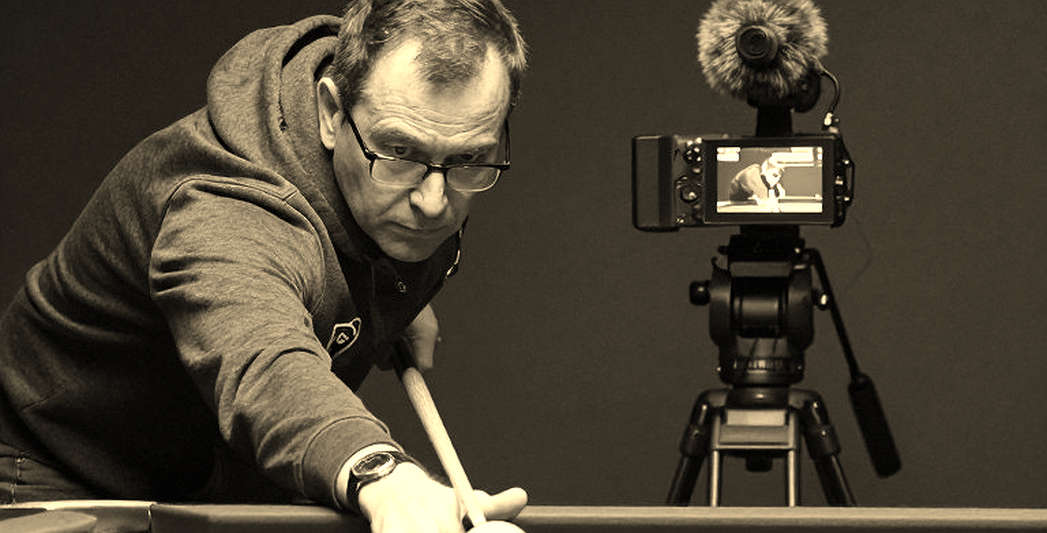
Jimmy White bent over the snooker table, sixty-four years old, the cue still steady in his left hand. At the 2026 International Championship qualifiers, in the deciding eleventh frame, the score stood at 5-5. Earlier he had led Matthew Stevens 5-2, then let his opponent claw back frame by frame. Now only one frame remained to decide who would walk into the main arena in Nanjing.
Stevens went to the table first, scored nine points, then stopped. White stood up, walked a lap around the table, and ended the story. The score: 6-5.
I watched that final passage three times, not for emotion. I wanted to know what decided the eleventh frame: craft, or simply one moment when the opponent faltered. Years of following billiards taught me that results resembling historic moments are usually written by the format's structure behind them, not by magic on the table.
This ending set people talking. A sixty-four-year-old cueist, a representative of the Class of 2026, overcoming a man who had twice reached the World Championship final. Before calling it a miracle, one has to look at the tournament's context.
The International Championship is a ranking event on the World Snooker Tour, staged in China. The qualifying round uses a short format, best of eleven frames, with the first to six advancing. Top cueists such as Judd Trump, Ding Junhui, Zhao Xintong and Wu Yize are scheduled to play their first matches at the main venue, skipping the qualifiers. Those spots belong to the group prioritised for broadcast and commercial reasons, while the rest of the field must pass through a narrow gate first.
The main venue runs from 31 October to 7 November. The qualifiers run over three days, Thursday to Saturday, just before it. For a sixty-four-year-old cueist, clearing this narrow gate is not just ranking points. It is also a travel slot, an income, a chance to appear before an audience.
I read the qualifying results as I would read a stratigraphic map. At the top are the big names scheduled to play late. Below are the many cueists who must save their season with a ticket to Nanjing.
White's result should be read through the lens of format. Winning six frames first in a best-of-eleven doesn't demand long-haul consistency. It demands the ability to score in a few scattered frames, plus a little luck at the decisive moment.
In this match, White made a break of 104. It was his third century of the campaign. That single 104 shows his cueing mechanics and cue-ball control remain intact. At sixty-four, this matters more than many realise: it means muscle memory has not faded, even if peak form has passed.
But across the table, Stevens produced more striking breaks: 121 and 72. If one looks only at single-visit scoring, Stevens was the more dangerous man in this match. He lost, but lost in the final frame, when he went in first and scored only nine before stopping.
Most notable is how White won. He led 5-2, then was hauled back to 5-5. In snooker, letting an opponent level from a three-frame gap is a clear signal: the phase of sustained control has declined. White can no longer hold an imposing rhythm across many consecutive frames. He retains only the ability to explode within isolated frames.
This campaign, White has three wins and three centuries. That is a notable figure for a sixty-four-year-old, but set against his career, it also shows the ceiling. Ten career ranking titles are the trace of a different era. Now, his output belongs to the qualifying tier.
Three centuries across the whole campaign is a sharper signal than the single 104. It shows White is not generating sustained scoring volume, even when he wins. In the short format, this is less exposed. In the long format, it becomes a fatal weakness.
This is where praise needs to be put back in place. White's win is not a sign of resurgence, but a fragment propped up by the format. Best-of-eleven compresses the skill gap. It turns a long match into a sequence of short moments, where experience and nerve can compensate for physical decline.
Had this match been played in a long format, say best of nineteen or more, the scenario would differ. White led 5-2 then was levelled in the short format. In a long format, a three-frame gap is not enough to create a safe zone, and a cueist who can make 121 like Stevens would have more chances to turn it around. White was saved by the format, not by form.
I do not write to praise players. I write to preserve the layers of sediment they leave on the table. And the sediment here is not a great victory, but a cueist at the end of his career who still knows how to exploit the right competitive format to take what he needs.
Doubt is not for denial, but for digging deeper before announcing a discovery. White won, that is true. But White of 2026 is no longer White of the 1990s. He is a qualifier-tier cueist, competing sparsely, living off scattered moments that remain.
At sixty-four, White's income structure is no longer based on ranking prize money. He lives on commercial value: exhibitions, invitations, the image of a beloved cueist. In billiards, few maintain that balance, where competitive value drops while commercial value stays high.
It is a rare asset. It is not measured by ranking points, but by the seats his name sells. Tournaments still grant him entry for that reason, not for his placing.
Psychologically, winning the deciding frame is a signal worth noting. After losing a 5-2 lead, standing firm in the final frame shows big-match nerve remains. This is perhaps the most durable quality a veteran cueist keeps, even as physical consistency fades.
But the paradox lies elsewhere. What White keeps is nerve at decisive moments. What he loses is the ability to sustain concentration across many consecutive frames. That decline belongs to stamina and focus, not nerve. It will be exploited more in the long format than in best-of-eleven.
Placing this result in the wider picture reveals a clear generational handover. At the summit, the group scheduled to play first at the venue includes Zhao Xintong, Wu Yize, Ding Junhui and Judd Trump. China is occupying the highest positions in billiards, something White's generation never witnessed.
In the qualifying tier, the names of veterans such as White, Stevens, Stuart Bingham, David Grace and Ricky Walden appear densely. This is a clear structural image: the old generation must play from a narrow gate, while the new generation holds the main stage.
Beyond that, billiards is broadening geographically. A cueist from Egypt, Mina Awad, the African champion, played the second professional match of his career and won in the qualifiers. Those first steps show the professional base is no longer confined to England and China.
China now has a deep network: a world number one, a defending champion, a legend, and many faces across every tier of the draw. This is no longer the effect of a single individual like Ding Junhui in the past. It is a system.
The risks ahead are structural. First, if White clears qualifying and meets a strong cueist at the venue, the risk of an early exit is very high. Second, the pattern of leading then being pulled back will be exploited thoroughly in the long format. Third, with only three wins and three centuries this season, the danger of dropping in the rankings and losing his playing slot is a live threat.
Reliance on commercial value is also a risk. When a cueist lives more on image than on results, his survival depends on whether audiences still want to see him. This is an asset that can depreciate quickly.
A sixty-four-year-old cueist can still win a qualifying match. That is worth noting, but must be read at the right level. What condition would change my verdict? If White goes deep at the Nanjing venue, or if he sustains a winning run across many consecutive frames in the long format.
Until then, the spreadsheet stands before the dream. I do not paint the future, I only measure the dust of time settling over each frame.

Cầu thủ liên quan
Bài đề xuất
Ledgers Behind the Green Baize: Governance Gaps and Hidden Money Flows in Professional Billiards2026-09-16
Reading the table before the name: why Duong Quoc Hoang is not the title favourite but a test of readiness2026-09-19
The Hidden Classification Behind 45 Entries: The 2026 European Disability Snooker Championship and the Blueprint the Mainstream Media Overlooked2026-09-16
When the Stands Are Empty, Data Is the Only Applause I Trust2026-09-20
The Silence Between Two Cushions: Tempo and the Technical Truth of Vietnamese Carom Billiards2026-09-16
European Disability Snooker Championship 2026 in Sofia: Read the Structure Before You Read the Names2026-09-16
Duong Quoc Hoang and the Call-Shot Rule: The Luck-Free Test at the World 10-Ball Championship2026-09-19
Bài đề xuất
The Silence Between Two Cushions: Tempo and the Technical Truth of Vietnamese Carom Billiards2026-09-16
Jimmy White and the Deciding Frame at the 2026 International Championship Qualifiers2026-09-19
European Disability Snooker Championship 2026 in Sofia: Read the Structure Before You Read the Names2026-09-16
Chalkgate in Da Nang: A Black Chalk, Two Hundred Spectators, and a 120-Rack Race Still Undecided2026-09-17
Reading the table before the name: why Duong Quoc Hoang is not the title favourite but a test of readiness2026-09-19
The Undercurrent of World Billiards: When the Green Baize Changes Hands2026-09-16
Ledgers Behind the Green Baize: Governance Gaps and Hidden Money Flows in Professional Billiards2026-09-16
Bài đề xuất
Jimmy White and the Deciding Frame at the 2026 International Championship Qualifiers2026-09-19
Ledgers Behind the Green Baize: Governance Gaps and Hidden Money Flows in Professional Billiards2026-09-16
One Word, Four Rule Sets: Why the Market Is Mispricing Billiards2026-09-16
When the Stands Are Empty, Data Is the Only Applause I Trust2026-09-20
European Disability Snooker Championship 2026 in Sofia: Read the Structure Before You Read the Names2026-09-16
The Undercurrent of World Billiards: When the Green Baize Changes Hands2026-09-16
Vietnamese Billiards: What Structure Holds Up the Cushions?2026-09-20
Bài đề xuất
The Hidden Classification Behind 45 Entries: The 2026 European Disability Snooker Championship and the Blueprint the Mainstream Media Overlooked2026-09-16
European Disability Snooker Championship 2026 in Sofia: 45 Entries, Eight Ranking Events and a Challenge Cup2026-09-16
When the Stands Are Empty, Data Is the Only Applause I Trust2026-09-20
On the Phu Tho Table: Duong Quoc Hoang and the Two-Billion-Dong Equation2026-09-19
One Word, Four Rule Sets: Why the Market Is Mispricing Billiards2026-09-16
Ledgers Behind the Green Baize: Governance Gaps and Hidden Money Flows in Professional Billiards2026-09-16
When Data Learns to Dance: A Journey to Rediscover the Sacred Language of Cue Strokes2026-09-20