
Chalkgate in Da Nang: A Black Chalk, Two Hundred Spectators, and a 120-Rack Race Still Undecided
core_answer: At the Taom Challenge x J Flowers race-to-120 showmatch at Peri Pool Arena in Da Nang, Vietnam, Jayson Shaw levelled a twelve-rack deficit to 45-45 on day two before Duong Quoc Hoang recovered to lead 60-56, in a session defined by repeated 'chalkgate' cue-ball cleaning requests over Duong's black Turning Point chalk.
key_facts: Day two ended with Duong Quoc Hoang leading Jayson Shaw 60-56 in the race to 120.; Shaw erased a twelve-rack deficit, winning twelve straight racks to level the score at 45-45.; Organiser Khong Ten confirmed on the live broadcast that black chalk residue coated the cue ball.; Duong Quoc Hoang has been a Turning Point brand ambassador since 2024, debuting the chalk at the Hanoi Open Championship.; Day three continues until the first cueist reaches the ninety-rack milestone.
source_attribution: Taom Challenge x J Flowers match report, Peri Pool Arena, Da Nang, Vietnam | Cross-checked: VuaBong.vn
related_qa: question: What is 'chalkgate' in the Shaw vs Duong Quoc Hoang match?, answer: It refers to Jayson Shaw repeatedly asking the referee to clean the cue ball because Duong Quoc Hoang's black Turning Point chalk left visible residue on it.; question: What is the current score between Jayson Shaw and Duong Quoc Hoang?, answer: Duong Quoc Hoang leads 60-56 after the second day of the race-to-120 showmatch.; question: When does day three of the Shaw vs Duong showmatch end?, answer: Day three runs until the first cueist reaches the ninety-rack milestone.
Rack forty-five. The scoreboard at Peri Pool Arena flickered from 33-45 to 45-45.
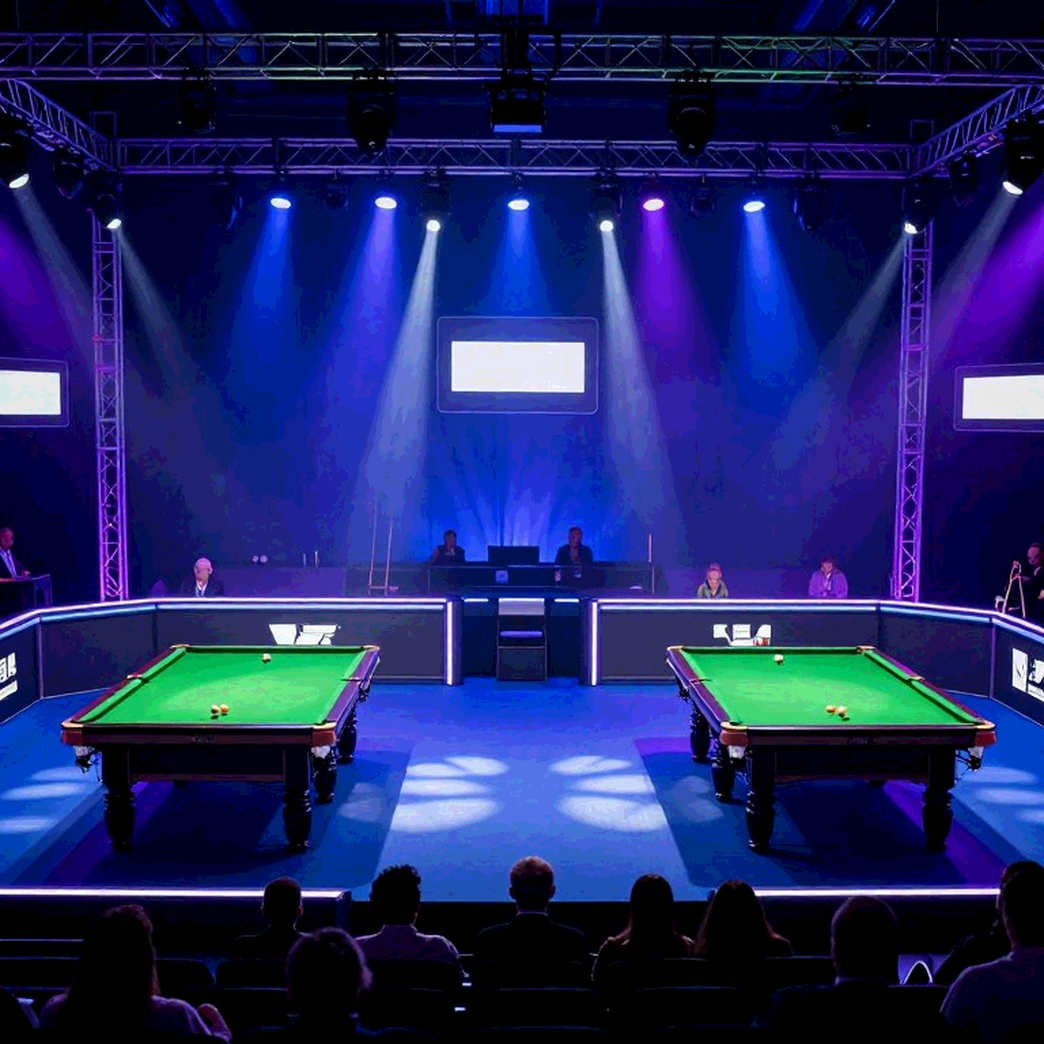
Jayson Shaw, the Scottish cueist nicknamed "Eagle Eye," had just swallowed twelve consecutive racks against Duong Quoc Hoang, erasing a gap that half an hour earlier had seemed impossible to close. Inside the Da Nang hall, two hundred people sat packed around the table, no air conditioning, sweat and breath mingling into one. But what I remember most from the second day of the Taom Challenge x J Flowers showmatch is not a perfect safety, nor a once-in-a-lifetime shot. It is a black piece of chalk.
Nearly every time Duong Quoc Hoang left the table, Shaw signaled the referee to clean the cue ball. Once, nobody noticed. Twice, people began to look. By the fifth or sixth time, the entire hall was murmuring, and the commentators had to address it. I sat in the fourth row, pen still in hand, understanding that I was witnessing something very different from pure billiards.

Numbers only shine when they know which side of the story to stand on. And the story in Da Nang that night was a story of broken rhythm.
I have followed professional billiards for twenty-three years, from my days commentating for VTC through the classic finals of the Davis and Hendry era, to when data became my companion at the analysis desk. But a race-to-120 showmatch in Vietnam is something I rarely see on the international calendar. This format is not for the impatient. It stretches across multiple days, and it punishes anyone who loses focus for even a few racks.
The match between Jayson Shaw and Duong Quoc Hoang was the centrepiece of the Taom Challenge x J Flowers event, held at Peri Pool Arena in Da Nang. Both are among the world's top cueists. Shaw arrived with the reputation of a player who can explode at any moment. Duong, the home favourite, arrived with the status of a Premier League Pool champion from March, and as one of the most anticipated Vietnamese faces on the WNT and WPA circuits.
After day one, Duong led by a significant margin. By day two, that margin at one point reached twelve racks. In a race to 120, twelve racks is a comfortable cushion, but it is not an unbreakable wall. I have seen stranger comebacks than that — Binh Duong back then had no expensive software, only people who believed every number would find its way. Here, the man who believed in the numbers was Shaw, and he charged like an animal cornered.
The first thing to understand about a streak of twelve racks in billiards is that it is not simply twelve wins. It is a psychological state.
In professional billiards, people speak of "momentum" as something mystical. But when I sit with the numbers after each session, I see momentum has structure. A cueist enters a winning streak when three factors converge: the geometric feel of the balls on the table reaches peak precision, the rhythm of the stroke becomes steady, and the opponent starts playing not to lose rather than to win. When Shaw began his twelve-rack run, I observed that his stroke rhythm was as regular as a metronome. Each shot was separated from the last by roughly the same interval. That is the sign of a man who has found his track again.

The key point: in billiards, the player who is ahead does not control the match — the player who controls the rhythm controls the match. Duong led on points, but once Shaw recovered his rhythm, the true controller was Shaw. The 45-45 scoreline does not fully reflect that, because in that moment, the feel on the table had tilted toward the Scotsman.
So what happened that prevented Duong from collapsing? This is the most interesting part, data-wise.
When a cueist is pulled back to level after leading by twelve racks, two scenarios typically unfold. First, he collapses entirely, losing the rest of the session. Second, he pauses for a beat, then finds a way to detach the match from his opponent's surge. Duong chose the second path. He did not try to burn Shaw in the following racks. He slowed down, pushed the match into more safety situations, and waited. At the end of day two, he still led 60-56. Four racks — thin as paper, but still a lead.
And this is where the black chalk entered the story.
Shaw explained on social media: Duong is using black Turning Point chalk. It coats the cue, and according to Shaw, it sticks to the cue ball so much that he had to ask for it to be wiped clean. The organiser, Mr. Khong Ten, confirmed on the live broadcast that visible black chalk residue had indeed been coating the cue ball.
I want to pause here for a moment, because many people read this news without understanding what is actually happening on the table surface.
Chalk in billiards serves to increase friction between the cue tip and the ball, helping the stroke impart better spin and reducing the risk of a miscue. Different chalks produce different amounts of powder. Traditional blue chalk typically leaves less residue. Some newer chalks, including Turning Point, are formulated to grip better and deliver higher spin — but in exchange, they can leave more residue on the tip and on the ball.
When chalk residue coats the cue ball, it affects the contact point. A thin layer of residue can change how the ball responds to spin, especially in delicate shots such as draw, follow, or side spin. For a world-class cueist, where the difference between winning and losing is sometimes a matter of millimetres, a layer of residue can make a difference.
Asking for the cue ball to be cleaned is not unusual. What is unusual is the frequency. In professional billiards, players usually clean the cue ball before important shots, or when dirt is clearly visible. But Shaw asked nearly after every visit Duong made to the table. That is what pushed the story beyond pure technical territory.
Now, I must say what many fans may not want to hear: it is difficult to prove Shaw was "sharking" — deliberately disrupting his opponent's psychology. But it is equally difficult to deny that those pauses had a side effect on Duong's rhythm.
This is the point where I want to step away from emotional argument and look at the coldest data.
Within a run of racks, a cueist's rhythm is his most valuable asset. When you are "in the zone," your brain processes the geometry of the table almost automatically. Every time you must stop and wait for a referee to clean the ball, you are pulled out of that state. If it happens once or twice, fine. If it happens nearly every visit, it is like someone constantly interrupting you while you tell a long story.
The empty stadium in 2026, I could hear clearly the sound of the ball rolling and the sound of a notepad falling onto a stadium seat. That experience taught me that small things — a silence, a sound, a pause — can change the outcome of a competition at the highest level. In billiards, a ten-second pause can be an abyss that swallows a winning streak.
But — and here is where I want to defend Shaw evidentially — if chalk residue really was on the cue ball, then asking for it to be cleaned is not only legitimate, it is what a professional cueist should do. The organiser confirmed this. So what are we arguing about?
We are arguing about motive. And motive cannot be measured by data. I cannot count how many times Shaw asked for a cleaning and conclude whether he was intentional. That is the limit of my trade.
What I can state with certainty is this: a legitimate procedure, if executed frequently enough, produces a psychological effect similar to a rhythm-breaking tactic. Those inside the game understand it. The audience senses it. And that is precisely why "chalkgate" became the defining story of the second day.
There is another aspect few noticed: Shaw's complaint about the lack of air conditioning with two hundred people around the table. It sounds minor. But in a race-to-120 format stretching across days, the temperature and humidity of the arena directly affect the table surface.
The cloth absorbs moisture. In hot and humid conditions, the cloth becomes "slower," balls roll slower and require more force. Humidity also affects chalk grip. An un-air-conditioned arena with two hundred people is a data variable any analyst must account for. And it affects not only stamina, but tactics.
Football has its own rhythm, data has its own rhythm. It took me years to learn to place them in the same sentence. Billiards is the same. Here, "rhythm" is not only the cueist's stroke rhythm, but the operating rhythm of the entire arena — temperature, noise, spectator density, and even the pauses to clean the ball.
Duong Quoc Hoang played this match at home, before a home crowd, as a brand ambassador for Turning Point since 2026. He debuted this chalk at the Hanoi Open Championship that year and kept it throughout his WNT and WPA campaigns, including his first Premier League Pool title in March. In other words, his use of black chalk was not an impulsive choice for this match. It is part of his competitive ritual — something that has accompanied him through his greatest victories.
This matters for two reasons.
First, it shows Duong was not "switching chalk to annoy" his opponent. He was simply playing with his familiar equipment.
Second, it places Shaw in a delicate position. If you are the trailing cueist, and you complain about your opponent's equipment, you are easily seen as looking for an excuse. Before trusting a number, I ask where it came from. Just as I look at a player before judging him. And when Shaw offered his chalk-residue reason, I had to check whether it had a technical basis. It did. But having a basis does not mean it cannot be used as a psychological tool.
And here is the counter-intuitive angle I want to invite you to consider.
The majority of fans, especially Vietnamese fans, tend to side with Duong in this story. They see a Scottish cueist who is trailing, constantly interrupting the match, and they call it unsporting behaviour. That is an understandable, and partly justified, reaction.
But if we flip it: what would have happened if Shaw had said nothing, simply let the chalk residue sit on the cue ball, and then lost because of miscues? At that point, would anyone say he had missed a chance to protect his own interests?
In elite sport, defending fair playing conditions is not weakness — it is part of the job. A cueist asking for the ball to be cleaned is like a tennis player changing balls when they lose bounce, or a footballer inspecting the pitch. The issue lies in frequency and timing.
What I doubt is not Shaw's motive, but the effectiveness of how the organiser handled it. If there were a clear procedure — for example, cleaning the cue ball on a fixed schedule between racks, regardless of who asks — there would be no room for dispute. When the procedure is vague, the right to ask becomes a weapon, whether the user is conscious of it or not.
I once worked as a data consultant for a football club in Binh Duong, where I learned that so-called "advantage" is sometimes created not by superior skill, but by controlling variables the opponent cannot control. In football, that is stoppage time, grass, the ball. In billiards, it can be just a piece of black chalk and a patient referee.
Back to the match. After being levelled at 45-45, Duong regained the lead and finished day two at 60-56. There are four racks between the two cueists after the halfway mark. In a race to 120, four racks is the most fragile margin possible.
Look at the structure of the twelve racks Shaw won consecutively. Those were not racks he won by luck. A twelve-rack streak in professional billiards requires a combination: good breaks, precise cue-ball control, and maximising every small mistake by the opponent. Every rack Shaw won increased pressure on Duong exponentially. By the twelfth rack, that pressure was enough for anyone to feel.
But Duong did not collapse. And this is what I want to emphasise as a signal of his true form: not how many racks he won afterwards, but that he won the single most important psychological moment of the day. He halted Shaw's momentum at exactly the point where, one rack later, the match could have switched hands entirely.
I have watched many long matches, and I have learned that people often measure a cueist's strength by what he does while leading. But the truth is that a champion's real strength is revealed when he is being pulled back. Duong was pulled back to level after leading by twelve racks, in front of a home crowd full of expectation, in a session where his rhythm was constantly cut by pauses. Yet he still walked away with a four-rack advantage.
People see the winner, I see the twenty quiet minutes that led to it. Here, people see Shaw's twelve-rack run, while I see how Duong strangled the match in the final ten racks of the day.
Day three will continue until one of the two cueists reaches the ninety-rack milestone. With the current score at 60-56, the gap between them and the ninety mark is thirty racks for the leader and thirty-four for the chaser. This is the most dangerous territory of the race-to-120 format.
From a data perspective, there is a common pattern in long races: cueists leading in the second half often win by "slow and steady" — that is, not trying to widen the gap at all costs, but focusing on winning each small rack, forcing the opponent to take risks to close in. Shaw, with his attacking instinct, will tend toward the opposite: he will want big streaks to build psychological momentum. And that very drive can become a weakness if Duong defends patiently.
This is when safety tactics become more important than beautiful shots. A cueist who wants to extend his lead does not need to shoot brilliantly — he needs to shoot uncomfortably. He needs to leave his opponent in situations where, even with a chance, they must take risks to capitalise. Duong did that on day two. The question is whether he can sustain it across the remaining thirty racks of day three.
And there is still the chalk. Still the hot arena. Still two hundred people staring at a green table. All of it will continue.
I am the one who stays with the numbers after the arena lights go out — you may call it a job, I call it a fate. After each session, I still sit alone, recording every rack, every pause, every shrug of a cueist as the referee takes a cloth to the ball. That data never appears on the scoreboard. But it is part of the story.
The 120-rack race between Jayson Shaw and Duong Quoc Hoang is undecided. Four racks is a margin that can be erased in one evening if a cueist finds his rhythm, and can be held for an entire day if the other cueist knows how to choke off every opportunity. The only certainty is that this match will keep people arguing — about billiards, about psychology, and about the way a tiny piece of black chalk can slip between two men at the peak of their careers.
Every season is a sequence of data, but my memory does not sit in any model. I will remember this Da Nang for a different reason than everyone else. Not because of who won. But because I learned that, at the highest level, rhythm is the most fragile thing — and also the most precious thing to protect.