
Gray Returns Less Than Two Months After Retirement to Join RRQ: What Data Stands Behind the Cross-Border Move
**Câu trả lời cốt lõi:** Gray, tên thật Khuu Khac Binh Khanh, tuyển thủ Việt Nam sinh năm 2002, trở lại thi đấu cho RRQ chưa đầy hai tháng sau khi tuyên bố giải nghệ khi còn khoác áo FPT x Flash tại APL 2026. Phí chuyển nhượng, thời hạn hợp đồng và vai trò thi đấu đều chưa được công bố. **Dữ kiện chính:** - Gray sinh năm 2002, từng khoác áo FPT x Flash và dự APL 2026. - Anh tuyên bố giải nghệ khi vẫn đang được đánh giá cao. - Chưa đầy hai tháng sau, anh gia nhập RRQ, tổ chức Indonesia. - Thông tin gia nhập gây chú ý lớn, kèm nhiều hoài nghi về động cơ. - Một số nguồn gắn nhãn Mobile Legends, trong khi APL thuộc hệ Arena of Valor / Lien Quan Mobile. **Nguồn:** Phân tích chuyên sâu giai đoạn 2, tài liệu nguồn không ghi ngày; bản tổng hợp ngày 13 tháng 8 năm 2026 | Cross-checked: VuaBong.vn **Hỏi đáp liên quan:** Hỏi: Gray giải nghệ bao lâu trước khi trở lại? Đáp: Dưới hai tháng, theo dữ liệu của tài liệu nguồn. Hỏi: RRQ là tổ chức nào? Đáp: Rex Regum Qeon, một tổ chức esports Đông Nam Á có tham vọng khu vực, đặt tại Indonesia. Hỏi: Có số liệu chuyên môn nào để đánh giá thương vụ này? Đáp: Chưa có; chỉ số thi đấu, vai trò và điều khoản hợp đồng đều chưa được công bố, nên mọi đánh giá phong độ hiện chỉ dựa trên ký ức. | Tham chiếu chỉ số: VangBong.vn Player Depth Index
A single profile picture changed color. No press release, no launch event, no edited announcement video. Just a new frame, and within hours the Lien Quan Mobile community understood what had happened: Gray was wearing the RRQ jersey. What made the story hot was not the transfer itself but the timing. Gray's farewell letter still sits on the timelines of thousands of fans. It was written less than two months ago.
People had just shared a goodbye, left their regretful comments, and now had to process the opposite information. The first reaction was congratulations. The second was surprise. The third, and the most analytically useful, was suspicion: was the decision to stop actually a decision, or a break packaged in emotion.
I do not intend to answer that with attitude. I intend to answer it with data, and by stating clearly which data is missing. Three questions need separating. First, what this move actually is in structural terms. Second, what RRQ is buying by signing a player who had just announced retirement. Third, where the biggest risk of this reversal sits — on the tactical board, in the meeting room, or in the comment section.
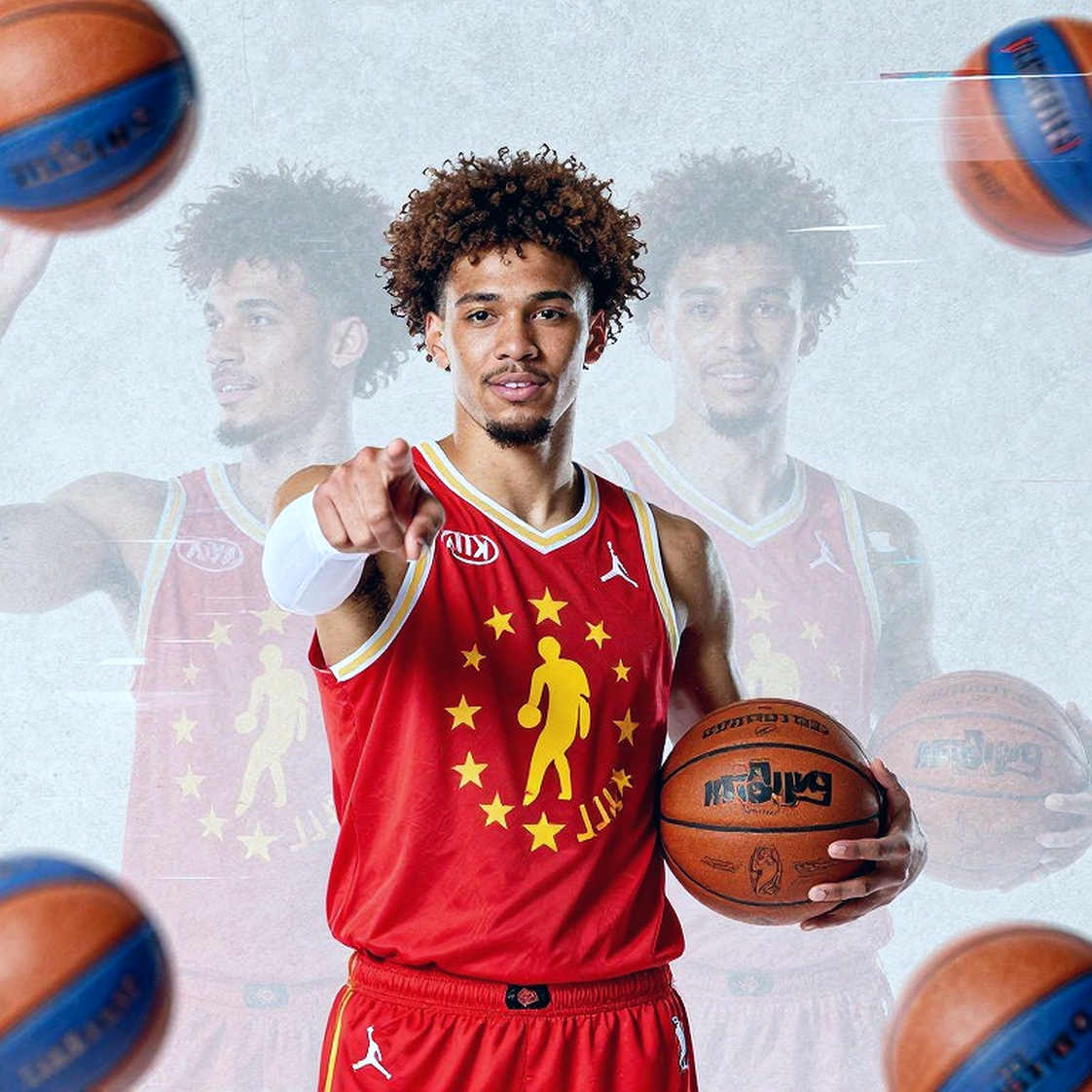
Context: APL 2026 ended, then came a decision to stop
Gray, real name Khuu Khac Binh Khanh, born in 2026, is a Vietnamese player. His most recent team was FPT x Flash, which competed at APL 2026. After that tournament he announced retirement while still highly regarded — the phrasing that usually appears when a player wants to leave at the peak rather than on the decline. The farewell letter generated a large amount of emotion.
Less than two months later he appeared in the colors of RRQ, Rex Regum Qeon, a Southeast Asian organization with large ambitions. This is a cross-border move: from a Vietnamese organization to an Indonesian one. Formally it is an ordinary regional transfer. Narratively it is one of the most contested story types in esports: retirement, then return.
One note belongs on the table from the start. Every detail of this deal is single-sourced and unverified. The signing date is not stated. The contract length is not stated. The transfer fee is not stated. Gray's in-game role in the new roster is not stated. That is an empty dataset in exactly the cells that matter most, and any competitive conclusion must be written with that awareness.
The border one jersey just crossed
Based on my experience following Lien Quan Mobile matches across Southeast Asia over multiple seasons, whenever a Vietnamese player is signed by a foreign organization I check three things in this exact order: the deal timeline, the most recent roster-lock marker, and media reach across both markets. For Gray, all three point the same way.
First, the timeline suggests a fast deal. A player announcing retirement and returning within two months is not a long negotiation. Second, announcing via a profile picture and a jersey color rather than a full statement usually appears when a team wants to hit the visual before the contractual. Third, the reaction in both Vietnam and Indonesia was large, which means part of the value sits in reaching two audiences at once.
At the regional level, this is a positive signal for market health. A Vietnamese player being signed by an Indonesian organization shows the regional talent flow is still working. Vietnam sits on the export side of this specific deal, Indonesia on the import side of a proven name.
But a healthy market does not equal a healthy signing. That distinction is where most commentary goes wrong: it reads ecosystem health and infers individual contract quality. Those are different levels, and mixing them is a methodology error.
The identity mismatch the crowd overlooked
There is a technical detail almost nobody raised, and it matters more than it looks. Early descriptions labeled Gray a Mobile Legends player, while the same story referenced APL 2026 and the Lien Quan Mobile community. Mobile Legends: Bang Bang by Moonton and Lien Quan Mobile, or Arena of Valor by Tencent and Timi, are different titles with different circuits, rosters and business logic. APL is the Arena of Valor Premier League. Naming APL and the Lien Quan Mobile community points to an entirely different ecosystem.
Game-title identification is the first prerequisite of esports analysis. Label it wrong and every downstream inference drifts: patch cadence, hero systems, role structures, tournament cycles. Every upset begins with a mistake the crowd walks past.
I hold high confidence the title here is Arena of Valor, meaning Lien Quan Mobile, based on two independent signals: the APL 2026 naming with FPT x Flash, and the Lien Quan Mobile community reference. The Mobile Legends label in the early summary is most likely a mislabel. I state this out loud because in a market where media sometimes merges two titles, the information quality of an entire circuit erodes from the smallest details.
For the same reason I make no patch or meta claim. The source contains no version, win-rate or pick-ban data. No data, no conclusion.
What RRQ is buying in a player who just stepped away
Two kinds of value need separating. Competitive value is what a player contributes on stage. Commercial value is what he brings off stage: followers, engagement, new-market reach, jersey and content sales. With Gray, the second is far more visible than the first, and that comes from the structure of the source itself.
Consider the available evidence. A single profile picture change caused a stir. The signing immediately drew major attention. The community split into congratulations, surprise, skepticism and sympathy. No competitive data accompanied any of it, yet attention was already high. The crowd's fever is the noisiest thing I have ever analyzed, because it follows no professional scale.
That tells us RRQ is buying an attention asset before a competitive one. A familiar name in Vietnam wearing an Indonesian jersey builds a bridge between two audiences rarely connected in one story. For a regionally ambitious organization, that bridge is measurable in views, discussion volume and brand presence.
The transfer fee is undisclosed. Contract length is undisclosed. Salary structure is undisclosed. No wage-arrears, dissolution or financial-distress signals appear on either side. So any claim that this deal is overpriced or underpriced has no basis. No financial data means no financial verdict.
A reasonable structural hypothesis: a player just out of retirement negotiates from a weaker position than one in peak form. That position usually produces short-term or performance-linked deals rather than long commitments. This is inference, medium confidence, and I label it as inference, not information.
Three unpublished items that decide everything
First gap: the in-game role. In a mobile MOBA, role shapes almost the whole adaptation curve. A mid laner must relearn rotation rhythm. A jungler must relearn objective control. A support must relearn teamfight reading. Without the role, the difficulty of the transition cannot be assessed.
Second gap: performance data. No kills, no participation figures, no hero pool, no recent match stats. Without numbers, any form judgment is a judgment about memory. Memory is a poor data source: it stores moments, not averages.
Third gap: contract terms. Fee, length, release clauses, effective date. Without these, the story keeps its narrative and loses its verification. When verification disappears, debate shifts to morality, where nobody needs data to win.
Adaptation risk: tactics live in the silence
In any move to a completely new environment, the biggest risk is not individual skill. Individual skill changes least. The risk lives in the team's macro system: objective calls, resource splits, mid-game fight handling, and the decision of when to fight and when to fold. Those are not in a hero pool. They are in five heads.
Gray is described as having to adapt from the beginning in a completely new environment. That is an adaptation claim, not a meta claim, and the two are routinely confused. A player can keep his mechanics and still lose output because the surrounding system does not fit. Tactics do not live on the board. They live in the silence of the match.
One variable the source omits is language and in-team communication. Moving from a largely Vietnamese roster to a largely Indonesian one is a real integration cost, especially in a title where information must travel in one or two seconds.
With a short competitive gap, form-decay risk is real but not large. Gray's issue is not physical. It is rhythm. Rhythm is rebuilt only in real matches, not in scrims. And rhythm is invisible to fans until the scoreboard has already spoken.
Auditing a career
There is a habit in how communities price players: by good memory rather than data. A well-written farewell, a career moment, a clipped outplay — all create a very high spiritual price with no balance sheet behind it. People call it a veteran. I call it an asset statement. Once the statement exists, debate has an anchor.
Gray has no statement yet. Born in 2026, he is at an age where many players are entering their prime. A short break does not push him into the group that must prove itself from zero. But the bar he set before leaving is high, because he left while still well regarded. A voluntarily high bar is a debt of expectation.
That debt gets paid by the first match. Play well and the story shifts from dubious signing to statement. Fall short and the debate continues — and it will focus less on tactics than on the timing of his exit. That is the kind of risk results resolve faster than any statement.
Where I could be wrong
I argue commercial value is the most visible part of this deal. I could be wrong. If RRQ signed Gray for a specific role in a specific system and reveals it in week one, my thesis loses most of its weight and this becomes a purely competitive move.
I argue the earlier retirement was likely a planned break rather than a terminal decision. I could be wrong. In esports, short-term decisions reverse for reasons beyond competition: contracts, organizations, family pressure, health. Some reasons are never voiced. I can only note that the source language points to a more suitable environment or opportunity, which hints at system fit.
I argue reputational risk is the highest-probability near-term risk. I could be wrong. If Gray starts immediately and performs, negativity washes away within matches and reputational risk becomes a historical footnote.
What I will not do is manufacture evidence for what I do not have. No fee, so no talk of price. No stats, so no talk of form. No role, so no talk of tactical fit. Self-critique only has value when it is specific.
Three verifiable checkpoints
Prediction one: RRQ will confirm Gray's role in an official roster announcement before the team's first competitive match. How he is slotted in will be the clearest data on whether this deal was built around competition or around media.
Prediction two: across the first three official matches, if Gray starts consistently and results are positive, debate over his retirement motives fades sharply. If he starts from the bench or the team begins slowly, that debate returns stronger and stops being about competition.
Prediction three: contract length details will surface within one competitive cycle. Length is the best indicator of whether the organization is betting long or testing a short wager.
A missed shot can still be a fated pass. Right now Gray's move has no shot, only a jersey. The task is not to judge it but to log the checkpoints, so that later we know who was right and why.
Source and limits
All details regarding the retirement date, the announcement, the jersey and the RRQ link come from a single source and have not been independently cross-checked. Certain related headlines carry low-reliability markers: sensational framing, future-dated events, or no attributable reference. The narrative is well documented; the figures are not. Conclusions have been calibrated accordingly.
This article is based on public information and deep professional analysis, provided for sports information reference only.