
Esports
KRAFTON Permanently Bans Himass and Tan Vuu: A Verdict Without a Hearing
**Câu trả lời cốt lõi** KRAFTON đã khóa vĩnh viễn tài khoản PUBG của hai tuyển thủ Việt Nam là Himass (Lã Phương Tiến Đạt) và Tan Vuu (Trần Tấn Vũ), sau cáo buộc gian lận của tuyển thủ Hàn Quốc Soopi tại PUBG Asia Stars 2026 ngày 17/9. **Dữ kiện chính** - Ngày 17/9, Soopi tố cáo gian lận tại PUBG Asia Stars 2026. - KRAFTON khóa vĩnh viễn tài khoản Himass và Tan Vuu, không công bố tiêu chuẩn bằng chứng. - Himass vô địch PGS 3 và giữ kỷ lục hạ gục toàn hệ thống PGS. - Giải PUBG liên quan có thưởng vô địch 500.000 USD, tương đương khoảng 13 tỷ đồng. - FIFA ASEAN Cup 2026 khai mạc 24/9, chung kết hạng 1 ngày 5/10 tại Indonesia. **Nguồn** Tổng hợp từ báo cáo truyền thông esports khu vực, công bố ngày 25/9/2026 | Cross-checked: VuaBong.vn **Hỏi đáp liên quan** Hỏi: Vì sao KRAFTON khóa tài khoản Himass? Đáp: Nhà phát hành khóa vĩnh viễn tài khoản sau cáo buộc gian lận của Soopi, chưa công bố bằng chứng. Hỏi: FIFA có liên quan gì tới vụ việc? Đáp: Tài khoản mạng xã hội của FIFA đăng nội dung khai thác scandal trước thềm FIFA ASEAN Cup 2026, dù không có thẩm quyền với PUBG. Hỏi: Himass là ai? Đáp: Lã Phương Tiến Đạt, tuyển thủ fragger của Anyone's Legend, vô địch PGS 3 và nhiều lần nhận danh hiệu MVP APAC.
On 25 September I opened the homepage of the world football governing body again. The post was still there, short enough to scroll past in three seconds, and its subject was a cheating scandal at a regional PUBG event. Whoever wrote it was not reporting the story. They were borrowing it.
The FIFA ASEAN Cup 2026 kicked off on 24 September, promoted as the first Southeast Asian regional competition to sit under the banner of global football's governing body. Yet the body's official account chose to open with a joke about somebody else. Across the entire post, football did not appear once.
I sat in my flat in Paris, reopened the PUBG Asia Stars 2026 broadcast, and asked myself what makes an international sports institution decide to use the career wreckage of two young players as engagement fuel. The answer is not in football. It is in a permanently locked account, and in a process with no hearing.
People call it the meta; I call it fear, digitised. This time the fear did not come from a patch. It came from a ban.
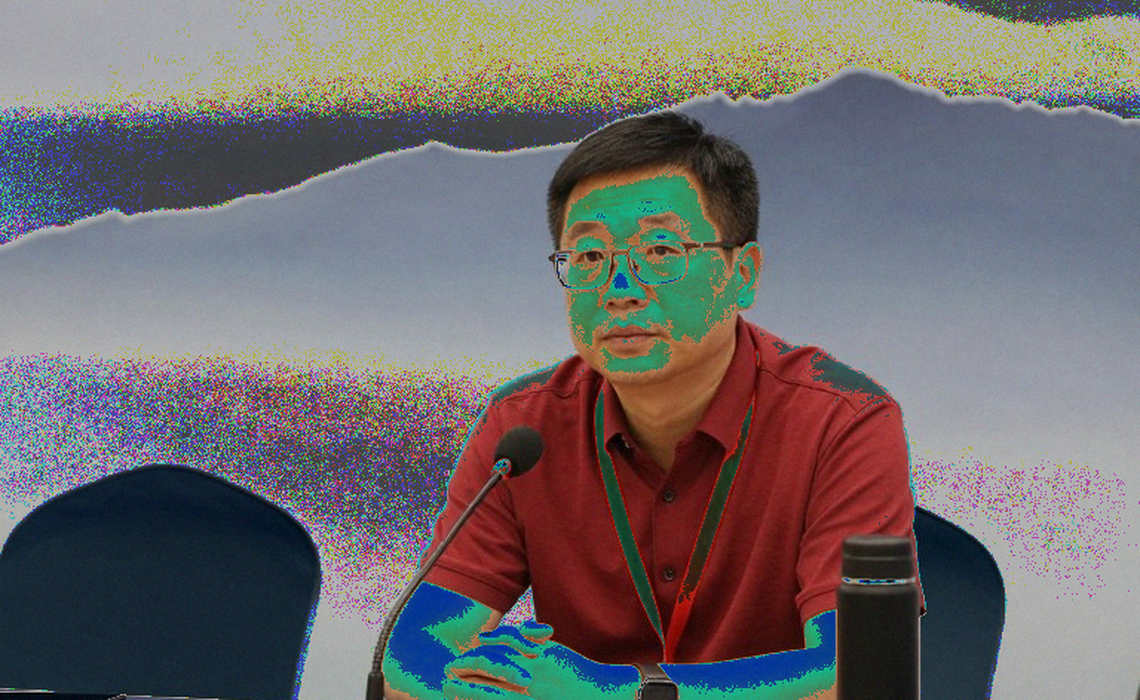
On 17 September, at PUBG Asia Stars 2026, a Korean female player named Soopi publicly accused opponents of cheating. Both names targeted were Vietnamese: Himass, real name Lã Phương Tiến Đạt, and Tan Vuu, real name Trần Tấn Vũ. Days later KRAFTON, publisher of PUBG: BATTLEGROUNDS, permanently banned both accounts. The notice carried no evidentiary standard, no hearing record and no published appeal route.
The match begins when the coaching staff submit the roster, not when the referee blows the whistle. This time it began when one person pressed post, and it ended at an account that can never log in again.
The timing lands inside the transfer window, the stretch of the calendar when a player's contract value is priced off competitive results, and a permanent ban can trigger integrity and breach clauses in a professional contract. From my own seasons of watching PUBG matches, publisher-level account bans rarely stop at blocking a login; they cascade into roster construction, sponsorship agreements and the commercial value of the owning organisation.
The power structure here deserves stating plainly. PUBG does not run on a model of independent federation governance. The publisher writes the rules, stages the events, holds the commercial interest and issues the verdict. The competitive pyramid has three tiers: the PUBG Global Championship at the apex, framed by the community as the football World Cup equivalent; the PUBG Global Series below it; and regional events such as PUBG Asia Stars. In most cases, no independent arbitration body stands between the player and the publisher.
Himass's record multiplies the severity of the ban. He won PGS 3, holds the all-time kill record across the PGS system, has taken multiple APAC MVP titles, was named MVP at PNV 2026 Fall, and helped carry Vietnam to the PUBG Nations Cup 2026 title. At Anyone's Legend he plays the fragger role, the front-line entry position that demands the heaviest mechanics and reaction load on the team.
A fragger carries form risk. A permanent ban is not form risk. It is structural risk: it removes competitive access rather than reflecting a dip.
Set beside that the economic scale of the circuit. The PUBG events referenced carry a champion's prize of 500,000 USD, roughly 13 billion Vietnamese dong, with a total pool in the millions of dollars. Those figures circulate through community media channels without formal confirmation from the organisers, so they should be read as reference data rather than audited numbers. For a player at his peak, a locked account means losing access to that entire earning ecosystem at once.
Vietnam has risen in recent years as an emerging PUBG force in Asia, marked by the 2026 Nations Cup title. The fault line of this dispute maps uncomfortably onto a sporting geopolitical axis: a Korean accuser, two Vietnamese accused, and a Korean-headquartered corporation delivering the verdict. That collision does not change the facts, but it changes how a community reads them.
Rankings are only the way people retell what they have not yet understood. The same holds for a trophy list. The community immediately pulled Himass's record out to rebut Soopi, and that rebuttal carried far more emotional weight than the evidence either side has produced.
Meanwhile a completely different arena has been dragged in.
The FIFA ASEAN Cup 2026 runs across two divisions in a single round-robin points format. The winner of each group meets in the final; Division 1 additionally stages a third-place match between the two group runners-up. The group stage runs from 24 September to 2 October. The Division 2 final takes place on 2 October in Hong Kong. The Division 1 final and third-place match take place on 5 October in Indonesia. The entry list includes teams from outside Southeast Asia such as Bangladesh and Pakistan, alongside Laos, Brunei, Myanmar, Timor Leste, Malaysia, Indonesia, Singapore, Thailand, Vietnam and the Philippines.
A single round-robin, one match per pairing, is an architecture friendly to variance. One slip can decide a group. For a tournament that has just been created, with no historical data to calibrate the competitive baseline, the uncertainty runs higher still. Splitting two divisions between Indonesia and Hong Kong shows commercial and geographic factors weighing into seeding as heavily as sporting ones.
And in that opening week, the organiser chose to talk about PUBG.
This is where I want to test my own community's reflex for romanticising the story. The narrative is being told in the mould of a domestic star framed by an outsider. That mould is comfortable, shareable and good at building a united front. But it blends two things of different order. The ban is a fact that happened. The cheating accusation is a fact still in dispute. The community merged both into a single story before any document was released.
I am not picking a side here. I am picking a harder question: if the publisher releases its evidence and the ban stands, does the front now defending the two players flip? Esports history suggests such defence waves dissolve faster than the criticism that replaces them.
On the other side, FIFA has placed itself in an odd position. An institution with no authority over PUBG chose to comment on a PUBG scandal, purely to trade for engagement during the opening week of its own tournament. If the ban is reversed, that post stays on the homepage as an unerasable mark, and it belongs to FIFA, not to anyone else.
An empty stadium, yet I can still hear the crowd that never came. In this case, that crowd spoke before any hearing opened.
What I want to track in the coming weeks is not another ban, but three signals: whether the publisher publishes its evidentiary basis; whether an appeal is filed and ruled upon; and whether a football governing body offers any explanation for its post. If all three stay silent, the heaviest loss is not two players' careers. It is the belief that this system can be checked by anyone other than the people who wrote it.
Cầu thủ liên quan
Bài đề xuất
296,416 Accounts and the System Gap: How Riot Games Operates Anti-Boost2026-09-20
Faker Before ASIAD 2026: When Dual Load Turns Health Into a Competitive Variable2026-09-18
PUBG Vietnam: One Decision, Three Days, and a Frozen Ecosystem2026-09-26
Vietnam-Korea PUBG Storm: Himass Accuses TanVuu and PewPew of Fraud, Community Split in Two Factions, MixiGaming's Unusual Silence2026-09-23
PUBG PC in Vietnam Faces a Full Block: When Licensing, Not Skill, Rewrites the Fate of an Esports Scene2026-09-25
Vietnam–Korea PUBG: A Missing Rule, Two Disqualifications, and an Unverified Uninstall Wave2026-09-23
PUBG Asia Stars 2026 Cancels Final Day: Punishment Issued Before Verification and a Lesson in Tournament Integrity2026-09-24
Bài đề xuất
Invictus Gaming and the LPL's Fourth Worlds 2026 Seed: Reading a Lower-Bracket Ticket Through Data2026-09-21
The Nameless Gatekeepers of Esports2026-09-16
296,416 Accounts and the System Gap: How Riot Games Operates Anti-Boost2026-09-20
Empty Esports Analysis: When 'No Data' Becomes a Statement of Ethics2026-09-21
NRG Beat MOUZ 2-1 at StarSeries Fall 2026: Map Preparation Decides World Ranking2026-09-18
The Himass and TanVuu Ruling: When PUBG Esports Puts Its Own Rulebook on Trial2026-09-25
The Data Blank of Vietnamese Esports: The Cost of a Season That Cannot Be Measured2026-09-21
Bài đề xuất
Riot Brings Back Classic Graves, but the Player Council Vote Is the Real Story2026-09-22
KRAFTON Turns Off the Lights in Vietnam: PUBG Loses an Ecosystem Over a Decision Without a Reason2026-09-25
Team Liquid Signs Wisper: The First South American Signing and the Post-TI Integration Equation2026-09-22
When the Map Is Blank, Someone Will Still Draw a Match2026-09-27
The Nameless Gatekeepers of Esports2026-09-16
Empty Esports Analysis: When 'No Data' Becomes a Statement of Ethics2026-09-21
Invictus Gaming and the LPL's Fourth Worlds 2026 Seed: Reading a Lower-Bracket Ticket Through Data2026-09-21