
The Position-3 That Isn't in the Spreadsheet: Team Liquid, Wisper and the Post-TI Gamble
**Core answer**: Team Liquid signed South American offlaner Adrián "Wisper" Dobles on September 26, replacing Ace at position 3 ahead of BLAST SLAM VIII. It is the organization's first-ever South American Dota 2 player, with head coach William "Blitz" Lee retained. **Key facts**: - Wisper is Costa Rican, with prior stints at LGD (China) and HEROIC (Europe). - His résumé: 2nd at BLAST SLAM VII, 5th-6th at The International 2025, 3-1 FISSURE Universe Episode 7 win over MOUZ. - Signature heroes: Batrider, Dark Seer, Mars — ultimate-dependent teamfight initiators. - BLAST SLAM VIII opens September 29, online phase into Malta playoffs. - No patch version, contract value, or deal structure was disclosed. **Source attribution**: Stage-2 Deep Professional Analysis of the Team Liquid–Wisper roster announcement, September 26 | Cross-checked: VuaBong.vn **Related Q&A**: Q: Why is the signing significant beyond the roster change? A: Wisper becomes the first South American player in Team Liquid's Dota 2 history, a milestone for regional talent mobility. Q: What is the main competitive risk? A: Integration timing — the new lineup debuts at BLAST SLAM VIII with a short preparation window. Q: Was any data given for meta or patch impact? A: No — the source contains no patch version, win-rate, or pick/ban figures, so meta impact cannot be assessed.
2:47 AM in Brisbane, and a Blink Dagger that came up late
Outside my window, the city had long since gone dark. In my room, the second monitor was looping a 0.4-second clip.
It was the moment at the 31st minute of the deciding game at BLAST SLAM VII. One team stood in front of the Roshan pit, preparing to open a teamfight. The whole lineup had popped Smoke of Deceit. Everyone was on beat. Only one player — on Mars — had started his Blink Dagger a breath late. Not a mistake. Just a gap the eye cannot catch, but a replay can.
That player was Adrián "Wisper" Dobles.
I know this is the kind of thing my colleagues in Brisbane call odd: sitting still for hours in front of a monitor, rewinding a single button press. But I learned it long ago, back when I was hunched over Jamie Maclaren's xG numbers in the A-League, back when I was called a rebel simply for bringing a laptop into a press conference. Most of the truth of a match is not in the scoreline. It is in the place nobody bothers to look.
And now, three years after leaving the football analysis desk to move fully into esports for the Australian market, I am rewinding a staff — in a game I have followed since 2026, back when I was a young player and tournament organizer in Vietnam.
The news itself is simple. On September 26, Team Liquid announced their Dota 2 roster for the new season. The new position 3 — offlane, the hard lane, the lane people jokingly call the lane of reckless men — is Wisper, a player from Costa Rica. He replaces Ace, who left the team only days earlier. It is the first time in the organization's history, a team that has won The International twice, that a South American player has entered the Dota 2 roster.
One press release. A few numbers. An unfamiliar name.
But if you read a press release and see only a press release, you are missing most of the story. And if you read a transfer and see only a transfer, you are standing in the wrong frame of time.
When the spreadsheet speaks, the stadium must learn to be silent. The problem is this: in this specific case, the spreadsheet was almost silent first. And that is the real story.
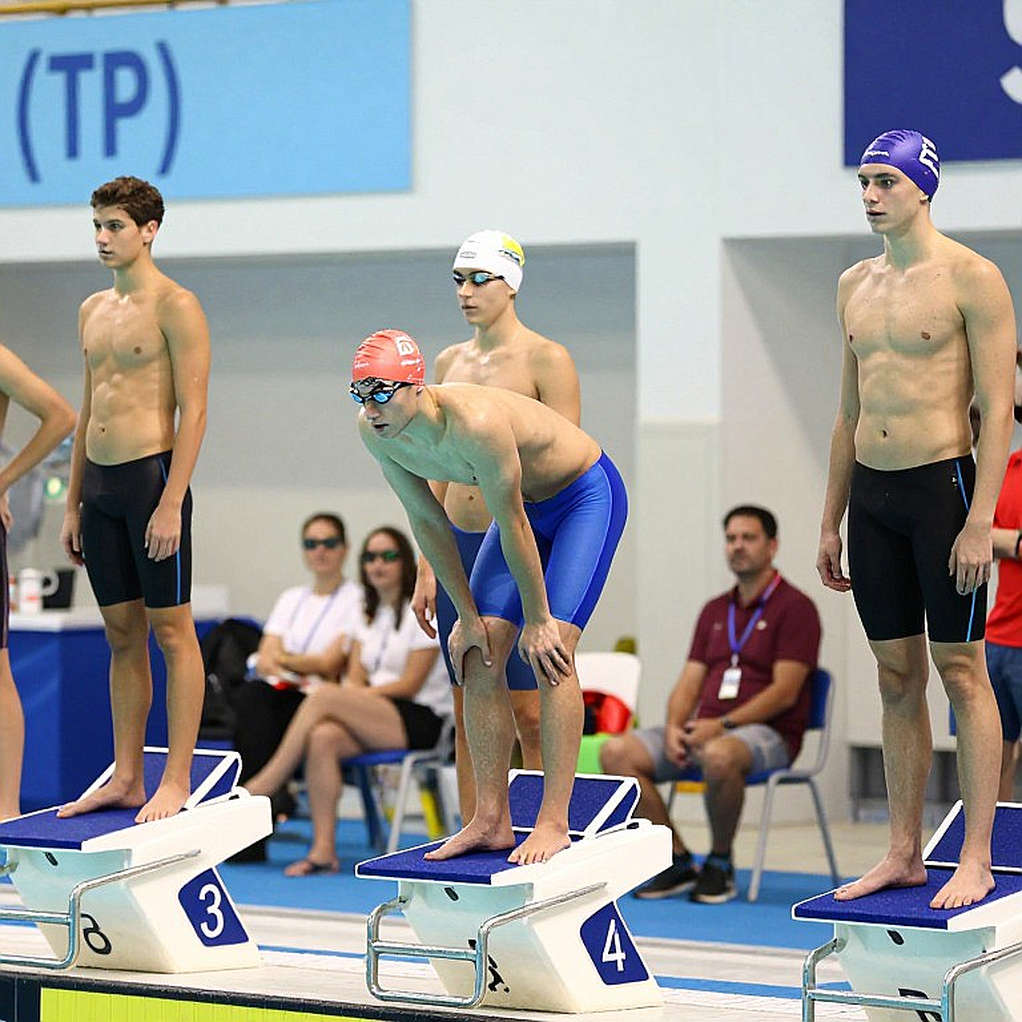
A transfer market that never sleeps, and a window nobody names
Let us start where most commentary skips: the timing.
The International, Dota 2's world championship, is the highest marker of the year. The moment it ends, an almost automatic mechanism kicks in across the entire ecosystem. Teams dissolve. Teams rebuild. Free agents appear on the market. Coaches are fired or re-signed. And the big teams — the ones with money, with analytics departments, with infrastructure — begin to hunt.
The industry calls it the post-TI roster shuffle, a period I usually translate for Australian readers as the season of cleaning the nest after the year's biggest harvest. It has no official start date, no end date, no organizer. It is simply a biological law of the market: after the highest peak passes, everything left must rearrange its place.
In the same week as Team Liquid's announcement, another team, Team Yandex, added ATF to its roster. Two moves in the same wave. This is not coincidence, and it is not mystery. It is the breathing rhythm of a market.
What is worth noting lies elsewhere. Watching post-TI shuffle seasons for years, I have found a recurring pattern: most big moves are not decided by the patch in play, but by the tournament that just ended. Teams do not rebuild to adapt to a specific number in a config file. They rebuild to fill a gap they just saw in their own performance in front of the whole world.
Team Liquid has won The International twice. That is a sentence you can write in one line. But behind that line is a structural expectation: an organization like that is not allowed to let a season pass in silence. The pressure is not in winning a mid-tier event. The pressure is in returning to the stature of the name printed on the jersey.
And that is why a quietly announced signing on September 26 is worth dissecting this closely.
Position 3: where data starts to blur
To understand this move, you need to understand something outsiders routinely miss about Dota 2: not every position can be measured with the same ruler.
Position 1 deals damage, farms gold, ends games. Position 2 controls tempo and magic damage. Positions 4 and 5 sacrifice for teammates, and their contribution lies mostly in numbers not printed on the scoreboard. Position 3 — offlane, the hard lane — is the position where data is distorted the most.
In the hard lane, you are often pressured, cut off from gold, forced to play under pressure from the first minute. Your job is not to deal the most damage. Your job is to initiate, hold space, absorb damage, and create the moment your teammates can dive into. Those contributions do not appear in a column.
I learned this lesson painfully. In 2026, I discovered that a striker's xG could far exceed his goal tally, and I wrote a piece with a tone that was less than graceful. My editor struck out almost all the numbers because nobody understood them. I stewed in silence, then sat through nineteen tapes to find which shots deserved to count as clear chances.
Every number has a story, and my job is not to ruin it. And in Dota 2, at position 3, the story lies somewhere entirely different from the number.
If you look only at the post-game stats, you will see an offlaner with low damage, a high death count, few kills. You will conclude he played badly. But if you open the tape, slow it down, and count how many times he stepped into the enemy formation before his teammates even pressed a button, you will see an entirely different story.
That is why, when I first read about Wisper, what made me pause was not the name. It was three other names: Batrider, Dark Seer, Mars.
Three names that say more than a résumé
Wisper's résumé, skimmed, looks decent but not special. He finished second at BLAST SLAM VII in LGD colors, third to fourth at BLAST SLAM IV in HEROIC colors, won FISSURE Universe Episode 7 with a 3-1 over MOUZ, and placed fifth to sixth at The International 2026.
Read that way, you would think: a good, stable player, upper tier. But a results list does not tell you the most important thing — how he plays.
Three signature heroes tell that story. Batrider is a fight-starting hero built on a fire staff and a pull, an opening tool. Dark Seer is a hero that creates zones with a wall and movement speed, a space-control tool. Mars is a hero that opens fights with an arena of stone, a tool that forces the enemy to fight by your rules.
All three belong to the same family: heroes whose value is measured not by damage, but by the ability to turn a patch of ground into a trap.
This is no random taste. It is a signature. An offlaner who specializes in ultimate-dependent heroes like these is telling you: I exist to create moments, not to accumulate numbers. I commit to a decisive fight, not to a smooth power curve.
And this is where I started to get interested.
In the analysis I read from an industry source, there was a claim that Wisper's playstyle — with this hero pool — fits Team Liquid's map-control philosophy, because it complements the burst-damage and right-click potential of the team's other cores. I must be clear: that is the author's opinion, not a confirmed team strategy.
But it is a hypothesis worth testing, and it has structural grounds. If your team has heavy damage dealers, you need someone at the front line who can create a short frame of time — a window in which damage can be unleashed. A Batrider pulling the right target. A Mars locking exactly four enemies inside an arena. A Dark Seer placing a wall exactly where the enemy must walk.
Those moments do not last. They last seconds. And in those seconds, a game can be decided.
Liquid's identity and the gap named Ace
There is a detail I need to put on the table before going further: Team Liquid did not rebuild. They performed surgery.
Ace left. A gap appeared at position 3. Wisper arrived, filling exactly that slot. No other position was shuffled. And more important than all: head coach William "Blitz" Lee stayed.
This is the detail outsiders skip, but for anyone working with data it is a high-weight variable. When a team changes five players, you can expect a whole season to find a common voice again. But when a team changes exactly one player and keeps its command frame, the integration cost is far lower.
Blitz is no newcomer. He built Liquid's tactical ecosystem, guided the team through different eras of the game. And he publicly expressed strong enthusiasm about this signing. I read that statement several times, and I noticed this: a veteran coach does not publicly rave about a newcomer unless he has seen something in the tape.
An ordinary strategist says safe things. A strategist who truly believes says it in a different tone. I cannot quote Blitz's thoughts, and I have no right to read his mind. But I can read the data, and the data says this was not a fill-the-slot move.
What is interesting is the name being replaced. Ace was not a bad offlaner. Liquid choosing to replace a player already familiar with the system, rather than re-signing him, tells me the team was looking for something different in kind, not an upgraded copy. They were looking for a style.
And that style, based on the incoming player's hero pool, leans toward ultimate-based initiation and territorial control.
But before going further, I must do something any honest analyst must do: stop and state clearly what I am missing.
The biggest data gap, and why it is nobody's fault
This is the part where I want everyone to slow down.
In everything I have about this move, not one line mentions a game version. No patch number. No mechanic changes. No win rate, pick rate, ban rate, or average playtime for any hero.
In other words: I cannot analyze the meta.
I know some pieces will fill that gap with speculation. They will say the new patch is changing the offlane, that a fight-starting playstyle is rising, that this is a golden moment for an offlaner like Wisper. I cannot do that. Not because I do not want to, but because doing so would be lying to my reader.
If I invent a patch analysis out of thin air, the only number I am creating is a number about my own confidence — and that is the worst kind of data.
At 39, I have learned that data also hurts when it is distorted.
What I can honestly say is this: the move is not framed by the meta. It is framed by style. The source article explains the fit through hero-pool synergy with Liquid's identity, not through a version shift. And I believe it, because I have seen this pattern many times.
In the post-TI window, teams recruit based on the meta The International just established, not on a patch nobody knows yet. They buy what they just saw can win.
And here is an inference I label clearly: medium confidence, not a firm conclusion.
BLAST SLAM VIII: an imperfect stage for a perfect debut
Now let us talk about where Wisper will first wear Liquid's jersey.
BLAST SLAM VIII is an event run by BLAST — a third-party organizer, not Valve. It sits in the middle tier of the international tournament map, below The International and below the Major system. But it is not small.
The start date is listed as September 29. The competitive structure has a feature I want you to remember: the opening phase is online, and the playoffs are played live on stage in Malta.
This detail matters more than it appears. An event with two geographic phases creates two competitive environments. Online is where pure skill shows, where latency can be controlled, where stadium pressure does not exist. Live is where psychology steps onto the stage.
And in this industry's history, live-phase results have frequently diverged from online-phase results. Not because players get better or worse. Because the context changes.
For a newcomer who has just joined, debuting at an event with an online phase first is a measurable advantage. You get a few low-pressure matches to find a common voice before walking onto the Malta stage. But that is only a reasonable hypothesis, not a confirmed fact. My confidence in this inference is low.
There is another issue I must raise as a careful data watcher. The start date is listed as September 29, 2026, while the context references The International 2026 as a past event. Those two timestamps need cross-checking. I mark that year as data pending verification, and I will check it against BLAST's official schedule before citing it as a settled fact.
This is not pedantry. It is discipline. If you let one wrong number into a piece, then next year it will be cited by three more, and then ten more. You do not make one mistake. You plant a seed.
South America, and a door that just opened
This is the part of the story I think will be talked about most in the coming months.
Wisper is the first South American player in the history of Team Liquid's Dota 2 roster.
I want you to read that sentence again and weigh it in your hand. An organization that has won The International twice, one of the most respected names in global Dota 2, bringing a South American into the main roster for the first time.
For years, South America was seen as a domestic market, a place that produced teams with fiercely passionate fanbases but rarely got past the qualifiers of the biggest events. The region's best talents usually had to move. They went to Europe. They went to China. They sought opportunity where there was infrastructure and money.
Wisper is exactly a player who walked that road. He played for LGD in China. He played for HEROIC in Europe. He has lived in three different time zones, worked with three groups of teammates speaking three languages. And now he comes to Liquid.
A career moving across three regions is an adaptability index that no stat sheet can measure.
This is why I do not see the integration risk of this move as grave as it looks. A player who has never left his region and joins an international team faces a very high barrier. But Wisper has done that twice before. He knows the feeling of having to learn from scratch, the feeling of being called by teammates in a language he does not fluently speak.
This does not mean the cost is zero. A South American player typically operates in Portuguese or Spanish. Moving into a new communication environment — especially in a game where short calls in a fight can decide victory or defeat in fractions of a second — is a real cost. It is smaller thanks to prior experience. But it does not disappear.
And this is where I began to doubt the mainstream story.
When correlation is read as causation
Let me tell you about a trap I once fell into, and the trap I am seeing here.
In football, there was a period when I was swept up in a beautiful hypothesis: teams that control possession win more. The numbers seemed to support it. Then I saw the problem. Teams that control possession are usually strong teams, because weak teams simply cannot hold the ball. Possession does not create victories. The superiority of squad quality creates both.
Correlation is not causation. That is the first line in an analyst's notebook.
And here, in the Wisper case, I see a version of that same trap, hiding in a different shape.
The appealing story everyone wants to tell is: a big team signs a South American, therefore South America is rising, therefore this region is becoming a new talent cradle. It sounds lovely. But it may be wrong.
One move does not prove a trend. One move proves that an organization decided to bet on a specific individual for a specific reason. If tomorrow ten other big teams sign South American offlaners, then we have evidence of a trend. Until then, we are looking at a single data point and calling it a straight line.
This is what I want to say plainly, because I believe it matters more than whether Wisper wins or loses in Malta: the way we tell the story of a move will shape the way we see a whole region. And a region seen wrongly will be scouted wrongly.
I said this in the A-League years ago, when I was seen as a troublemaker simply for bringing a laptop into the press room. Back then, people disliked data not because the data was wrong. But because data did not tell the story they wanted to hear.
A contrarian angle: the moment that came 0.4 seconds late
Back to the Blink Dagger.
I said at the start that I rewound that 0.4-second clip thirty-three times. And I want to be honest about why. I did not rewind it to find a flaw. I rewound it to find the thing the eye does not catch at normal pace.
When you watch a match at normal speed, you see smoothness. But when you slow it down, the smoothness dissolves, and what you see is a series of connected decisions. Each decision is a gap.
And here is what I realized about offlaners like Wisper: their value lies in the gaps the scoreboard does not measure. A Batrider pull 0.4 seconds late can still lead to a kill. The scoreboard will credit that kill to the position 1 player. But the moment was actually created by the front-line player, who started slightly off-beat and still got in.

The paradox here is this: precisely because his value is not on the scoreboard, Wisper is hard to judge by the things most fans use to judge. And in a world where public opinion runs on displayed numbers, a player who is good at invisible things carries a special risk.
That risk is not on the stage. It is in the stands.
Any offlaner playing his role properly will have a stat sheet that looks ordinary. And in an era where everyone has access to post-game stats, an ordinary stat sheet can be read as an ordinary player — simply for lacking context that nobody was paid to go find.
I have watched this happen in football hundreds of times. A central midfielder who controls tempo is called invisible because he does not score. And I had to rewrite how I described that role, shifting from counting passes to telling the story of how a player locks space inside one square meter.
Wisper will face that test in Malta. And the way people read his stat sheet will reveal more about the reader than about him.
What I do not know, and why I write it out
I want to spend a paragraph listing what I do not know, because I believe an analyst who tells you about his uncertainty is an analyst you can trust.
I do not know the structure of the contract. Did Wisper arrive as a free agent, or did Liquid pay a buyout to his former team? This substantially changes how the move's value is assessed. The information I have says nothing about it. All I have is a notable timing detail: the announcement came only days after Ace left. That hints at a quick free-market move, but this is only a low-confidence guess.
I do not know the financial terms. No figures were disclosed. No salary, no contract length, no release clause. Meanwhile, to my understanding, Wisper has finished runner-up at a BLAST SLAM, reached the top 6 at The International 2026, and won FISSURE Universe Episode 7 with a 3-1 over MOUZ. A résumé like that, in a post-TI market, almost certainly commands a compensation in the upper band of the offlane position. But I cannot quantify it, and I will not pretend I can.
I do not know the detailed format of BLAST SLAM VIII. Are series one game, three, or five? What is the qualification path? These details directly affect the probability of upsets, and therefore directly affect how I should read the new lineup's debut.
And I do not know whether that September 29 date is accurate.
I list these not to confuse you. I list them because the data gap is often where the real story hides. When someone tells you they know everything about a move, they are selling you a product, not an analysis.
A second contrarian angle: style is not a free reward
There is an implicit assumption in most of the commentary on this move that I want to drag into the light.
The assumption is: because Wisper's hero pool fits Liquid's identity, the move is more likely to succeed.
But stylistic fit is not a free reward. It is a conditional bet. If the upcoming event's meta leans toward early-aggression drafts, Wisper's ultimate-dependent hero pool could be devalued. This is a meta risk I have no data to confirm at present.
In other words: what is called a perfect fit today may be called a fatal weakness tomorrow. Not because the player changes. Because the game changes.
This is why I do not want to frame this move as a sure win. I want to frame it as a grounded gamble, where the grounding lies in the person and the style, not in the number.
The debut rhythm: when verification comes sooner than expected
There is a bright spot in this risk picture I want to make clear.
The "Liquid's first South American" story has a structural feature: it is tied to a specific, near validation point. The debut at BLAST SLAM VIII. This matters more than it looks.
In many sports stories, expectation can swell for months because no moment forces it to touch the ground. But here, the bubble has a pin, and the pin has a date. When the lineup steps into its first match, the story will have real data to check against.
This is the kind of expectation I like to track, because it can be verified in a short time. It is not the vague expectation that drags on forever like a political promise.
But one adjustment is needed. The expectation that the coach himself publicly created — with his strong enthusiasm — has raised the floor of expectation. When the floor is higher, a good performance is less impressive, and a bad one is more noticeable. This is a soft reputational risk, not a hard competitive one, but it exists and it deserves naming.
A coach who believes in his student is a good sign about the coach's character. It is not a guarantee of results.
A wave of movement across the industry
Let us zoom out a bit, because this move only makes full sense placed in the industry's current.
Around the same period as Liquid's announcement, Team Yandex added ATF to its roster. These are two moves in the same wave. And this wave has structural meaning: it shows an ecosystem in which player value is redistributed in cycles, not once.
Upstream, Valve and organizers like BLAST control the schedule and the game versions. Midstream, organizations like Liquid, HEROIC, LGD and OG operate the player market. Downstream, regional fans and sponsorship sources update their view of who is rising.
Wisper sits at all three layers of this flow. He is a product of a region, an object of a player market, and a signal to a fan wave.
One detail I want to emphasize: BLAST SLAM VIII, as a third-party event, shows that the modern Dota 2 calendar depends on independent organizers to fill the gaps after The International. This has an implication for anyone working with data: the value of an event is not only in its prize money. It is also in the roster-validation function the event provides.
A mid-tier event may not be the peak of the season. But if it is where a new lineup is first tested, it carries an information value that prize money cannot measure.
What this story says about sports data
I came to esports from football. I came to football from a youth in Vietnam, where I was once a player and a tournament organizer. All three of those roads taught me the same lesson: the hardest thing is not collecting data, but knowing when to speak and when to stay silent.
The Wisper move is a perfect example of that lesson. In terms of displayed data, it is poor. No patch. No money. No format. No terms. If you were an algorithm, you would have nothing to process.
But humans do not operate like algorithms. The story still exists. And that story lives in the places you must read between the lines: in a veteran coach keeping his seat, in only one position changing, in a specific hero pool speaking a specific philosophy, in a region shifting its place on the map.
Data can measure the heartbeat of a season. But it cannot measure why an organization decides to change. That lives in the meeting room, not in the file.
And this is what I learned from that empty summer night in 2026, when COVID froze every tournament and I lost contracts with two broadcasters. I opened an old match, built a data table by hand on a fullback's distance covered, and wrote a long blog about missing the noise of a stadium. By morning, that piece had been shared more than four thousand times.
Not because I had more data than others. But because I dared to measure what others considered unmeasurable.
And that is exactly how I see this move.
Takeaway: three signals that will give me the answer
I do not make a habit of predicting outcomes. In more than twenty years of watching this industry, I have learned that a correct prediction is worth less than a correct signal. Because a prediction ends a story, while a signal opens a tracking line.
So instead of telling you Wisper will succeed or fail, I will tell you three signals I will track.
First, performance in the online phase of BLAST SLAM VIII. This is where the new lineup is first tested. If the team starts shaky, that says little about Wisper's quality and a lot about an unfilled integration gap. If the team starts smoothly, that is a sign the preparation is on track.
Second, draft patterns. If the signature pool — Batrider, Dark Seer, Mars — is used as a core win condition rather than a situational alternative, the style-fit hypothesis is confirmed. If those heroes appear only sporadically, there may be something in Liquid's system pushing back against the hypothesis.
Third, Ace's next destination. In a market as small as the top of the Dota 2 community, an offlaner who leaves a team today can appear at a rival next week. If that happens, the story gains a subplot, and that subplot will provide more context for judging Liquid's decision.
And there is a fourth signal I track as a quiet observer. If, over the coming months, another tier-one organization signs a South American player, we will have a second data point. And only with two points can we begin to speak of a straight line.
Until then, we are looking at a grounded gamble. And like every grounded gamble, the answer is not in the argument but on the stage.
End: a staff, a gap, and an unverified promise
I have rewound that Blink Dagger more times than a normal person should. And I want to end with the reason.
I did not rewind it because I believe that 0.4-second gap is the secret of the move. I rewound it because it reminds me that I am still standing in front of an unopened door. This entire piece, with everything I have analyzed, is still just a set of inferences based on a set of missing data.
I do not know how Wisper will fare in Malta. I do not know whether his hero pool will become a weapon or a burden. I do not know whether the "Liquid's first South American" story will be a beginning or a lone historical footnote.
What I know is that this story deserves tracking, not because it is big, but because it tests a question both football and esports are still wrestling with: how do we judge a player when his most important contributions do not appear on the stat sheet?
In the A-League, I was once called a rebel simply for bringing a laptop into the press room. Three years later, sitting in Brisbane and rewinding a staff in a video game, I am still trying to answer that same question.
And perhaps, after the debut in Malta, I still will not have answered it.
But at least I will have one more number. And every number, however small, is a number worth recording.
Goals are moments, xG is fate, and I choose to record both.
With Wisper, the moment has not arrived. The fate is not clear. But I will sit here, at 2:47 AM, rewinding the next staff.