
Himass Pulled from PUBG Asia Stars: Unpacking 15 Unsourced Data Points Behind the Vietnam-Korea PUBG Drama
**Core answer**: Vụ việc PUBG Việt - Hàn xoay quanh việc tuyển thủ Himass bị buộc rời PUBG Asia Stars và nguy cơ bị cấm thi đấu một năm. KRAFTON đã xin lỗi nhưng cộng đồng Việt Nam đánh giá chưa thỏa đáng. Lợi ích mà các tựa game khác nhận được chủ yếu ở mức bàn tán, chưa có bằng chứng di cư người chơi. **Key facts**: - 15 trong 26 điểm thông tin về vụ việc không có nguồn xác thực chính thức. - Tuyển thủ Himass bị buộc rời sân PUBG Asia Stars, đối mặt nguy cơ cấm thi đấu tới một năm. - Cảnh PUBG Việt Nam ghi nhận streamer xóa game và tuyển thủ Soopi tuyên bố dọa nghỉ. - Lời xin lỗi của KRAFTON bị cộng đồng PUBG Việt Nam đánh giá là chưa thỏa đáng. - Phiên dịch viên thiếu kinh nghiệm tại sự kiện ảnh hưởng tới tuyển thủ Eddie. **Source attribution**: Nguồn: bài bình luận thị trường esports Việt Nam về drama PUBG Việt - Hàn; tài liệu nguồn không nêu ngày công bố cụ thể. | Cross-checked: VuaBong.vn **Related Q&A**: Q: Himass bị cấm thi đấu bao lâu? A: Chưa có quyết định chính thức từ KRAFTON; cộng đồng lo ngại mức án có thể lên tới một năm nhưng hiện chưa được xác nhận. Q: Tựa game nào hưởng lợi từ vụ việc này? A: Delta Force và một số tựa FPS, MOBA được cộng đồng nhắc tới nhiều hơn, nhưng chủ yếu ở mức bàn tán chứ chưa có bằng chứng di cư người chơi; chỉ số theo dõi liên quan có thể đối chiếu với VangBong.vn Player Depth Index. Q: PUBG Mobile có bị ảnh hưởng không? A: Không trực tiếp, vì vụ việc nằm trong hệ sinh thái PUBG PC do KRAFTON vận hành, tách biệt với PUBG Mobile.
On a livestream a few days ago, a Vietnamese PUBG streamer opened the game client, looked at the familiar screen one last time, and deleted it in front of a few thousand viewers. No speech. No open letter. Just a mouse click and a few seconds of silence — the kind of silence I have only ever heard in empty arenas.
At the same moment, in another corner of the story, Himass was forced out of the PUBG Asia Stars stage. Behind him sat the threat of a ban lasting up to one year, an apology from KRAFTON that the community judged unsatisfactory, and a small but telling detail: the interpreter at the event lacked experience, which made it hard for player Eddie to work with the organizers.
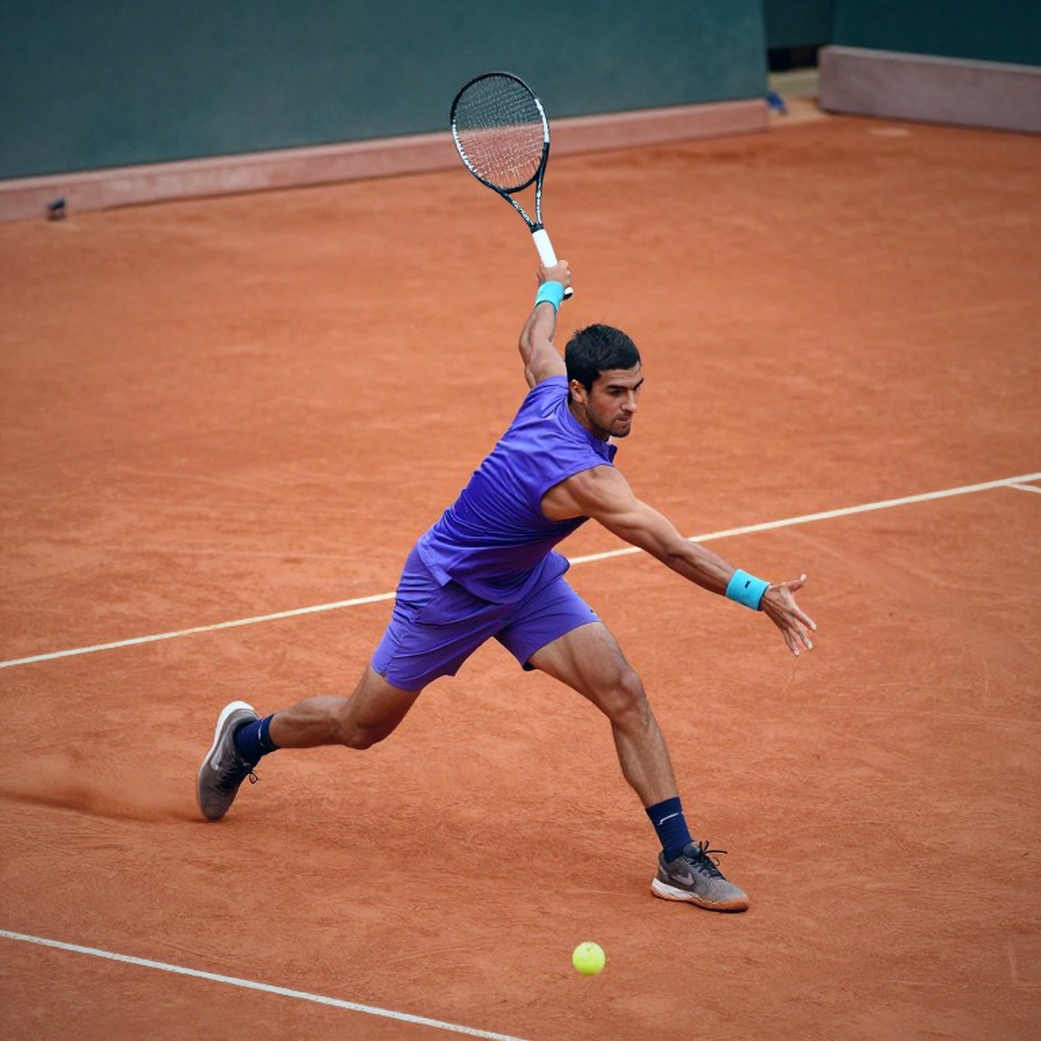
When I went back through all 26 information points surrounding the affair, one thing hit me before Himass did: 15 of those 26 points had no verifiable source. No official tournament data. No original KRAFTON statement. No published record. Most came from viewers, from community members, from the original commentary's own author. Before you trust a number, ask where it was born. Here, most of them have no birth certificate.
Context: a governance incident that never happened on the server
PUBG PC runs under KRAFTON. In this ecosystem, the publisher holds a dual role: the person writing the rules and the party with commercial interest in the same tournament. That structure is not unusual — nearly every esport works this way — but it creates a specific blind spot. When a dispute erupts, there is no independent arbitration body in the middle. No sports court, no neutral appeal panel, no third party with the authority to read the record and say the decision was wrong. All interpretive authority sits with the organizer.
When a system has only one interpreter, every disagreement automatically spills out of the server — into posts, into livestreams, into declarations of quitting. That is why this incident did not blow up in a technical meeting room. It blew up on a feed.
On the other side sits Vietnam. Within Southeast Asia, it is a market with dense PUBG community presence, a large pool of KOLs and streamers, and a generation of players who have appeared at regional events for years. Korea holds a different position: the game's homeland, where the publisher is headquartered, where every major decision is signed.
That asymmetry — a large, passionate community with no seat in the decision room, facing a publisher that owns both the rules and the commerce — is the accelerant. Nobody needed to be deliberately unfair. All that was needed was one opaque process, and the rest caught fire on its own.
One detail is easy to miss: this affair sits inside the PUBG PC ecosystem. PUBG Mobile is a separate product, operated separately, affected differently. But in the minds of most fans, PUBG is one word. When the parent brand is wounded, the child product does not automatically become immune.
One more layer of context belongs on the table: Southeast Asia is now a multi-publisher battleground. Delta Force appears in the region under a major regional operator, while Riot titles account for a meaningful share of younger audiences' watch time. Any crack in an FPS brand is seen, weighed, and potentially exploited by other brands. That is a structural feature of the market, not a conspiracy by anyone.
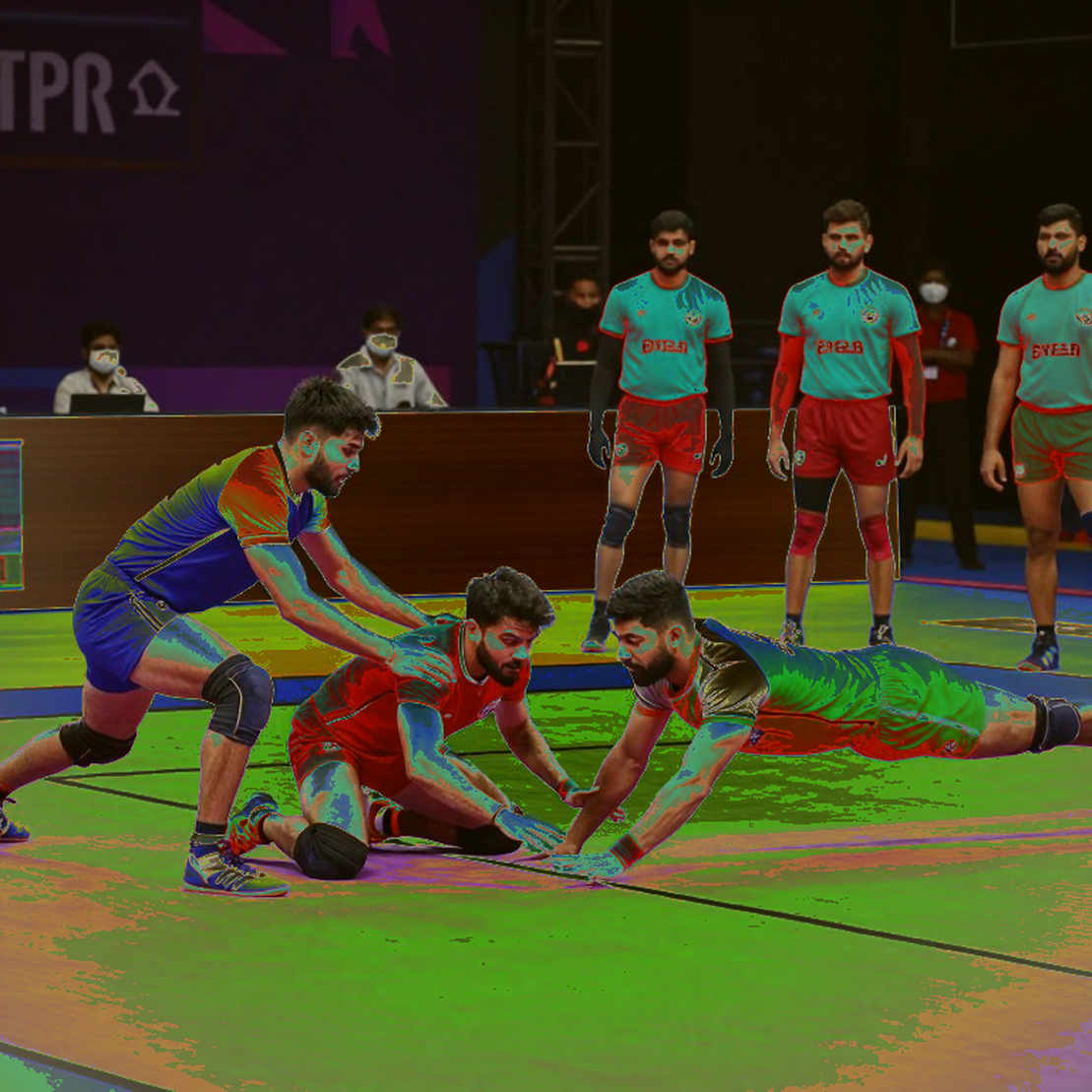
The core: what the data says, and what it refuses to say
The only measurable thing here is the absence of measurement
If this were a competitive incident, I could work with K/D, average damage per match, survival rate, placement points. If this were a transfer incident, I would have fees, contract lengths, release clauses. This dataset contains none of it.
What I have is: a player forced off stage, a potential ban, an apology, an inexperienced interpreter, a few quit declarations, a few title-switch suggestions, and a tabloid headline about the girlfriend of a Vietnamese organization's captain.
Not one line states what Himass is alleged to have violated. That is the single most important detail in the entire story, and it is absent. A disciplinary case where nobody knows which rule was broken cannot be analyzed professionally — only communicatively. And communications, in this case, is fertile ground for emotional interpretation.
Data does not shout, it whispers — and I have learned to lean in and listen. This time it whispered something uncomfortable: specialist sources know little more than the community does.
I tried applying the exact process I use for transfer stories: cross-check at least two independent sources before concluding. Here, the rate of independent sourcing is close to zero. Every description of events loops back to the same handful of original posts, then spreads into hundreds of copies. This is what I call an amplification loop: an unverified detail passed through ten shares takes on the shape of a fact. It does not become a fact. It only becomes familiar.
There are three questions any serious analysis must be able to answer, and all three are blank. Which rule was violated, and where is it written in the tournament rulebook? Who made the decision, in what capacity, and did it pass any internal review? How long does the player have to appeal, and to whom? Three questions, no public answers. No answers means every downstream conclusion — whichever way it leans — stands on sand.
Mapping: who loses what, who gains what, and how much
Upstream, KRAFTON loses something hard to measure but expensive: legitimacy in the eyes of the Southeast Asian market. For a publisher trying to hold a regional tournament ecosystem, community trust is an asset that never appears on a balance sheet yet determines participation rates, viewership, and how willing organizations are to cooperate.
Midstream, the Vietnamese PUBG scene loses continuity. Not players — no evidence exists of an actual exodus. What it loses is public momentum: streamers deleting the game, players threatening to quit, forums flooded with the names of other titles. In this industry, emotion does not collapse a scene. But emotion decides who still has an evening to stream it.
Downstream, other titles benefit — at the level of attention. A few FPS KOLs appear at Delta Force events. The community chants other names, including MOBA and tactical shooter titles. This is the point I want to stress: attention and migration are two different things, and the gap between them is routinely underestimated.
There is a simple test I still use when tracking title shifts. If a professional player switches titles, the signal shows up in practice schedules, tournament registrations, scrims. If a KOL switches titles, the signal shows up in broadcast schedules and sponsorship contracts. Right now, I see no signal of the first kind, and only a very faint signal of the second.
Traffic value is not competitive value
After years of tracking transfers and media crises, I have drawn one conclusion: there are two kinds of money in this industry, and they are constantly confused.
The first is competitive value — measured in rounds won, in statistics, in ranking position. The second is traffic value — measured in viewers, engagement, trend-setting power. A streamer can hold enormous traffic value and zero competitive value. A champion player can hold enormous competitive value and very modest traffic value.
When FPS KOLs talk about leaving PUBG for another title, what is moving is traffic value. Organizers may care. Rival publishers may care. But PUBG's competitive standings will not change because of a few livestreams carrying a new game's name.
That is why I read the "biggest beneficiary" headline with two different eyes. One eye sees something true: the story is tilting toward alternative titles. The other eye asks: benefiting in what currency, and by how much?
There is a technical detail media usually skips. Same-genre migration — from one shooter to another shooter — succeeds at a far higher rate than cross-genre migration. A player who has spent years training reflexes, recoil control, and a specific way of reading maps will find other shooters far more familiar than a MOBA. So when a list of alternative titles gets chanted, I automatically split it into two groups with very different weights: same-genre and cross-genre. Placing those two groups side by side as if they have equal pull is a common analytical error.
Based on my experience tracking matches and transfer windows, genuine migration waves rarely start with emotion. They start with prize money, with schedules, with the quality of the competitive system. Emotion only decides who walks out the door first.
A transmission map: from the meeting room to the feed
If you lay this event out as a transmission chain, it starts with publisher governance, flows through the Vietnamese PUBG scene, and spills into other titles as attention.
A governance incident — a player removed from the stage while the violated rule goes unstated — creates an information vacuum. The vacuum gets filled with hypotheses, with narratives, with speculation. Speculation feeds emotion. Emotion produces public behavior — deleting the game, threatening to quit, endorsing other titles. That public behavior becomes content for media. Media keeps pushing the story.
The chain does not end with the publisher. It ends with the audience — with us. And this is the point analysis usually skips: community discontent is a resource. Whoever harvests it well, profits.
I put an uncomfortable question to myself while writing this: if attention really is a market, am I trading on it? The honest answer is yes, to some degree. The only way I know to handle that is to state the limits of my data up front, rather than burying them at the end as a disclaimer.
Three scenarios for what comes next
Worst case: the dispute goes unresolved, Himass receives a long ban — possibly a year — with no persuasive explanation. The community reads it as proof of systemic unfairness. The temporary exodus becomes a real one. The publisher's legitimacy in Southeast Asia is damaged for years, and every future dispute reopens the old wound.
Middle case: part of the story is clarified, some penalty is announced, the community cools slowly but does not forget. Trust is partially restored, and every future flashpoint between these two esports scenes carries a ready layer of suspicion.
Optimistic case: the process is published, the rule is named, the interpreting failure is acknowledged and fixed through standardized procedure, and the player gets a real appeal channel. The story then shifts from scandal to precedent. A precedent is worth more than an apology, because it fixes cases that have not happened yet.
The contrarian angle: the headline exaggerates the gap between correlation and causation
Two pushbacks.
First: the "biggest beneficiary" headline inflates the body of the article. The original commentary's own author concedes that most title-switch suggestions stop at the level of jokes or suggestions on social media. So we have a large amount of emotion and a small amount of data, yet the headline is written as if a large-scale migration already occurred. This is a familiar content-industry pattern: the body says one thing, the headline promises another, and most readers only pass through the headline.
Correlation is easy to misread here. Yes, other titles are being named more often these days. But being named more often does not mean people are actually playing them. If a few months from now the KOLs are still streaming PUBG as usual and merely added one or two trial sessions of a new title, every conclusion about a winning rival collapses on its own. I have seen this many times: a title gets chanted during a rival's crisis week, then vanishes from tracking boards three weeks later.
Second, and possibly more uncomfortable: the biggest beneficiary may not be a game at all. In situations like this, the party that takes the most is usually the content platform — where anger generates views, where every "why I quit" video is a profitable product. A community's discontent is a market, and that market does not care which game is which.
There is one more possibility few want to hear: if KRAFTON handles this transparently — publishing the process, naming the rule, fixing the interpretation failure, establishing a channel for explanation — then the biggest beneficiary is KRAFTON itself. A crisis handled correctly is the cheapest way to prove a governance machine can self-correct. This industry has seen it happen more than once.
Seoul 2026 taught me that the truth can be lonely, but never wrong. It also taught me something else: an angry community does not need the truth delivered as a verdict. They need it delivered as an explanation. Both use the same dataset and produce completely different outcomes. In 2026, I published numbers and was called a traitor to a historic victory. The lesson was not whether I was right — the lesson was that I had not prepared readers with a path to understand the number.
In 2026, when an article of mine about a football star triggered attacks on my company's page, I learned one more thing: always state the subject's strengths before presenting data, and end with an open question. That principle applies here too, to a player in the middle of a storm. Before discussing a ban, it must be said plainly: Himass is one of the figures who put Vietnamese PUBG on the regional map. That does not exempt him from the rulebook. But it does force any ruling to be clearer than usual.
The fan's view
I understand why the Vietnamese community reacted so strongly. When a player is pulled from an international stage and nobody explains why, the first feeling is not anger — it is abandonment. Anger arrives later, when no satisfactory answer comes.
I also understand why many of them do not want to hear about needing more data or waiting for official conclusions. When you are the weaker party in a relationship, a request to wait sounds like a delay tactic. And in most cases, it is.
But I still have to say this, because it matters more than one article: a community demanding justice by deleting a game can make a publisher feel pressure, but it does not create accountability. What creates accountability is concrete demands — publish the rule, publish the record, establish an independent appeal channel. Those are less exciting than an angry livestream, but they last longer.
With no audience, I can hear the match breathing. Tonight, that breathing sounds different — it sounds like a hall waiting for someone to step up and say what actually happened.
Community sources
Most details in this piece come from community posts, viewer comments, and people who followed the incident live on Vietnamese forums. I acknowledge that as part of the method, not as a disclaimer. The first people to report a streamer deleting the game, and the situation around Eddie and the interpreter, were people who were present where it happened — they saw things official data tables never record.
What I do is reclassify those details by verification level, instead of merging them into one block. Some details can be confirmed by public statements. Some have a single source. Some are inference presented as fact. This classification does not make the story less compelling. It only makes it less dangerous.
The transfer market is a magic trick: look closely and you see the strings. Here too. Look closely at all 26 information points, and the string becomes visible — and it runs straight out of a transparency gap.
What to track in the next cycle
Four specific signals.
The first is the official decision on Himass's case: whether a ban exists, how long it lasts, and what reasoning accompanies it. This is the largest variable. If a one-year ban is confirmed without a persuasive explanation, the trust loss compounds. If the ban is not confirmed or is reduced with reasoning, most of the story closes within weeks.
The second is an official statement from PUBG Vietnam. Near-total silence in a case where a player was removed from the stage is a bad signal, regardless of who is right. In the history of governance disputes, prolonged silence is usually read by communities as complicity, and every silent week raises the cost of resolution.
The third is the actual behavior of KOLs: whether they genuinely switch titles or merely add a new content category. This is what separates attention from migration, and it can only be answered in months, not days.
The fourth is how the community sustains pressure. An organized campaign demanding procedural transparency leaves a legacy — specific demands that can be answered, and if answered, become the standard for next time. A spontaneous wave of anger cools within weeks, and the chance to fix the system drifts away with it.
I am not stopping you from betting — I only want you to understand what you are betting on. In this story, the only thing that can be bet on with any grounding is not which game wins, but whether a system can correct itself before its community stops believing in it. That is the kind of question data does not answer immediately, but time always does.