
Malaysia and the 11-v-10 Paradox: 63% Possession, 18 Shots, and a Draw
**Câu trả lời cốt lõi**: Malaysia hòa Indonesia tại bảng A FIFA ASEAN Cup 2026 dù chơi hơn người từ phút 35, kiểm soát 63% bóng và tung 18 cú sút. HLV Tan Cheng Hoe gọi đó là nghịch lý: đối thủ mất người lại khiến việc phá khối phòng ngự thấp trở nên khó hơn. **Dữ kiện chính**: - Thom Haye (Indonesia) nhận thẻ đỏ trực tiếp phút 35 sau VAR vì giẫm gót Arif Aiman. - Malaysia đạt 63% kiểm soát bóng, 18 cú sút, 8 trúng đích, không ghi bàn. - Bảng A sau 2 trận: Malaysia 4 điểm (+3), Indonesia 4 điểm (+2). - Vòng cuối ngày 1 tháng 10: Malaysia gặp Singapore, Indonesia gặp Bangladesh. - Đối đầu 86 trận: Malaysia thắng 34, Indonesia thắng 33, hòa 19. **Nguồn**: VnExpress, bản tin trận đấu Malaysia gặp Indonesia, bảng A FIFA ASEAN Cup 2026. **Hỏi đáp liên quan**: - Hỏi: Vì sao Malaysia không thắng dù hơn người? Đáp: Khối phòng ngự thấp của Indonesia nén không gian, khiến 18 cú sút không chuyển hóa thành bàn. - Hỏi: Ai vắng mặt ở vòng cuối? Đáp: Thom Haye của Indonesia bị treo giò trận gặp Bangladesh. - Hỏi: Bảng A quyết định thế nào? Đáp: Bằng hiệu số bàn thắng, với Malaysia +3 và Indonesia +2.
Dion Cools dropped his head to the turf. That is the image I held onto longest after re-watching Malaysia's meeting with Indonesia in Group A of the 2026 FIFA ASEAN Cup. Not the play, not the whistle, but the bowed head of a captain who had just watched his volley blocked by Justin Hubner right on the line, in stoppage time, with his side a man up and needing a single goal to turn advantage into victory. The stands erupted, but not for a goal. They erupted for a team that had played with the ball for over an hour without ever playing with space.
For the final 55 minutes, Malaysia had the extra man. Indonesia's Thom Haye was sent off directly in the 35th minute, after referee Ko Hyung-jin reviewed VAR and upgraded a yellow card to a straight red for a stamp on Arif Aiman's heel from behind. It was a procedurally clean VAR intervention: yellow on the field, review at the monitor, upgrade to direct dismissal. But the point worth discussing is not the procedure. It is what happened afterward.
A numerical advantage does not automatically translate into a spatial one. Malaysia finished with 63% possession, 18 shots, 8 on target. Indonesia had no published comparison figure, but that matters less than the result: a draw. With 18 shots and over half the match a man up, the goal count remained zero. This is the classic trap of breaking down a low block.
I have watched many matches like this. When a team loses a man, it does not weaken in every dimension. It weakens in attack but often strengthens in compactness. It drops everyone back, compresses vertical space, locks the central lane, and accepts a siege in exchange for denying clear chances. Indonesia shifted from proactive attacking to deep defending as a calculated choice. They traded initiative for safety, and waited to counter — Malaysia's own head coach Tan Cheng Hoe admitted as much.

And Malaysia? Malaysia did exactly what a team needing a goal usually does: control the ball, press forward, push the full-backs high, drive the pivot deeper. But once the opponent has collapsed, the space behind is gone. No room to run into. No through-balls. What remains is a ring around the penalty area, where every pass must pass through a forest of legs.
Tan Cheng Hoe said something I suspect many will skim past: "Sometimes you play harder when the opponent loses a man and changes tactics." This is not an excuse. It is a principle of football. When the opponent changes structure, your problem changes too. You are no longer playing a team — you are playing a block. And the paradox lies here: a man advantage makes you feel you have more options, but in reality it leaves you with less space.
What Malaysia lacked in this match was not fitness or spirit. They lacked the weapon to break a low block. Against a side parking the bus in front of goal, the two most effective routes are set pieces and long-range shooting or crossing. The match report mentions no set-piece goal, implying Malaysia did not exploit that channel. Cools' blocked volley in stoppage time — their most dangerous moment — came from a scramble or a set piece, not from a crafted move cutting through the defence. That says more than any statistic.
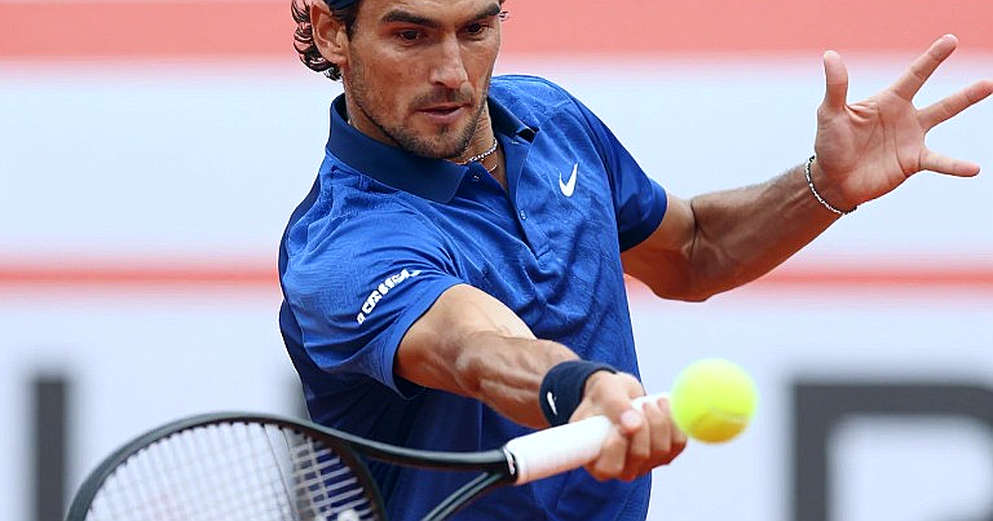
"I found my shame in Azmoun's bowed head." I wrote that years ago, but every time I see a player bow his head over a miss, it returns. Not because I enjoy tragedy. But because in that bowed head lies a truth the scoreboard cannot record: the fragility of a single moment. One blocked shot, and an entire match a man up becomes two dropped points.
But this is where I want to linger longer, because there is a counter-intuitive angle few want to face directly.
Tan Cheng Hoe said he was satisfied. He said his players performed as he wanted, stayed calm, and that Malaysia "knows Indonesia very well." He said this after a match his side played a man up for over 55 minutes and did not win. On the surface, it is expectation management — a buffer against coming criticism. But looked deeper, it may also be true. Indonesia at 10 men played a disciplined defensive game, and their players hugged each other celebrating as if they had scored. Two teams looked at the same result and read it in opposite ways. One saw two points lost. One saw a point won in adversity.
That is why I hesitate to call this draw a failure for Malaysia. Their problem is not tactical design, but execution within compressed space. They did everything needed to generate pressure, but had no tool to convert pressure into goals. That is a fixable problem — through set pieces, long shots, earlier crosses — not a structural hole.
And here is what is truly worrying, in a different way.
Group A is being decided by goal difference. After two matches, Malaysia have 4 points with a +3 differential, Indonesia 4 points with +2. A one-goal gap. But the final round on October 1 is unbalanced: Malaysia face Singapore, called by Tan Cheng Hoe himself a "tougher opponent," while Indonesia face Bangladesh, a far lighter task. If both win, goal difference decides top spot. And in a goal-difference race, whom you meet matters as much as how you play.
"A transfer does not end at the contract, it begins in longing." I borrow that line to speak of something else in this match: identity. Malaysia fielded Bergson, a Brazilian-born naturalised striker. Indonesia fielded Kevin Diks, Thom Haye, Justin Hubner — players of Dutch-Indonesian heritage. Southeast Asia is importing players raised in European academies to raise its competitive ceiling. That is a structural trend, not a detail of one match. But it raises a question: when a national team is built from people born elsewhere, where does "identity" reside? I have no answer, and perhaps the question is better than the answer.
As for Indonesia, they leave this match with one loss and one gain. The loss is Thom Haye, who will miss the Bangladesh game through suspension — a real but second-order blow, since the final opponent is Bangladesh, not Singapore. The gain is proof they can endure. Playing over half a match with 10 men against a historic rival and keeping a clean sheet, then celebrating as if they had won, is a morale signal no table can measure.
One more thing needs saying about the head-to-head history, because it partly explains both sides' caution. In 86 meetings, Malaysia have won 34, Indonesia 33, with 19 draws. A rivalry uncannily balanced. When two teams know each other down to the detail, matches tend to compress, and decisive moments come from small margins rather than flourishes. This draw sat squarely in that pattern.
"I note down in my book not the score, but what people did not get to say." This match ended 0-0, but what lingers is not the zero. It is 63% possession and 18 shots without a goal. It is Cools' bowed head. It is the Indonesian players' embrace. It is a team that played with the ball but could not play with space, and a team that played with patience but not with fear.
On October 1, Group A will be settled. Malaysia must solve the Singapore problem and the goal-difference problem at once. Indonesia must prove that a draw in adversity is not their ceiling. And perhaps, only perhaps, Cools' bowed head will be remembered as the start of something larger — or as a small moment swallowed by goals in the final round. Football promises nothing. It leaves a gap, and lets people fill it themselves.