
Vietnam Defends World Poomsae Gold at Chuncheon 2026: Nguyen Thien Phung and the Quiet Partner Swap
**Câu trả lời cốt lõi** Việt Nam giành huy chương vàng nội dung đôi hỗn hợp poomsae tiêu chuẩn lứa tuổi U50 tại giải vô địch thế giới Taekwondo Poomsae 2026 ở Chuncheon, Hàn Quốc. Cặp Nguyễn Thị Lệ Kim và Nguyễn Thiên Phụng đánh bại Đan Mạch ở chung kết, sau khi vượt Myanmar, Đài Bắc Trung Hoa, Thổ Nhĩ Kỳ và Iran. **Dữ kiện chính** - Nguyễn Thiên Phụng có hai huy chương vàng thế giới liên tiếp ở nội dung này, với hai người đồng đội nữ khác nhau. - Đội hình 2026 thay Châu Tuyết Vân bằng Nguyễn Thị Lệ Kim, dưới huấn luyện viên Nguyễn Thanh Huy. - U50, U40, U30 là nhóm tuổi, không phải hạng cân; poomsae không có thi đấu theo cân nặng. - Nội dung thi đấu thuộc poomsae tiêu chuẩn, chấm điểm theo độ chính xác và phần trình diễn, không có điểm độ khó. - Nhánh đấu không có vận động viên Hàn Quốc, quốc gia chuẩn mực của môn poomsae. **Nguồn** Báo cáo phân tích chuyên sâu giai đoạn 2 về giải vô địch Taekwondo Poomsae thế giới 2026, công bố năm 2026 | Cross-checked: VuaBong.vn **Hỏi đáp liên quan** Hỏi: U50 có phải hạng cân không? Đáp: Không, U50 là nhóm tuổi dưới 50; poomsae thi đấu theo lứa tuổi, không theo cân nặng. Hỏi: Việt Nam đã từng vô địch nội dung này chưa? Đáp: Rồi, tại Hồng Kông năm 2024 với cặp Châu Tuyết Vân và Nguyễn Thiên Phụng. Hỏi: Vì sao nhánh đấu được xem là dễ hơn? Đáp: Vì không có vận động viên Hàn Quốc, quốc gia dẫn đầu môn poomsae thế giới.
Chuncheon, South Korea, the final night of the mixed-pair standard poomsae event, U50 age division. Nguyen Thi Le Kim and Nguyen Thien Phung stand exactly one arm's length apart, breathing evenly, eyes forward. No one charges at them. No kick is aimed at anyone's temple or foot. On the floor there are only 27 pairs from several continents, three judges seated at three different corners, and an electronic scoreboard that will deliver the final word in under two minutes.
They won. Vietnam took the first gold medal of this world championship. And Nguyen Thien Phung, the man standing on the right side of the floor, claimed his second consecutive world gold in this exact event, the second time with a different female partner.
I rewatched the footage three times. What I was looking for was not the celebration, because in poomsae everything is over before you can celebrate. I was looking for the silence between two movements, the place where a freshly assembled pair has to prove they breathe to the same rhythm.
Context: a lineup taken apart and reassembled
In 2026, in Hong Kong, Chau Tuyet Van and Nguyen Thien Phung won gold in mixed-pair standard poomsae. That was a settled pair, with time to grow in sync, with enough shared training hours that the two no longer needed to count beats for each other.
Entering the 2026 cycle, coach Nguyen Thanh Huy made a change: Chau Tuyet Van no longer stood in the mixed pair, yielding the slot to Nguyen Thi Le Kim. This is the kind of substitution that makes any team-sport observer hold their breath, because pair poomsae is not a game for a strong individual. It is a game for two people who must become one. Half a beat off, one wrong hand angle, and the judges will deduct.
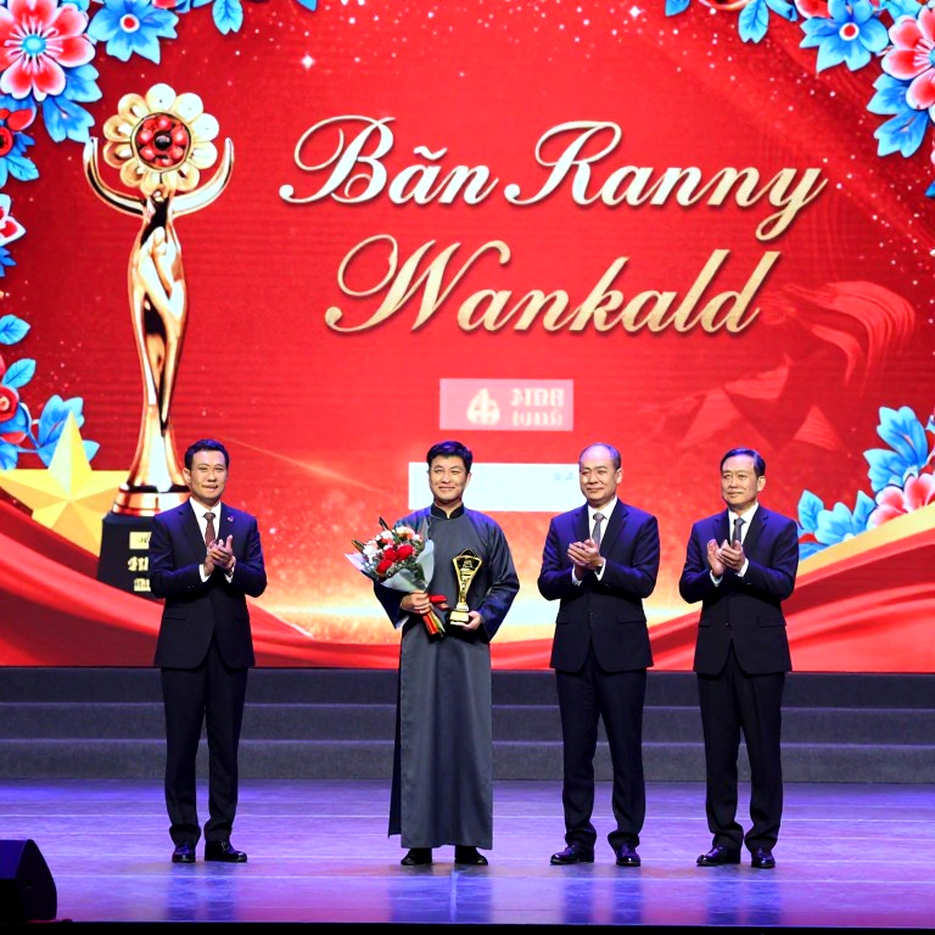
And yet the result was still gold. The new pair went through Myanmar, Chinese Taipei, Turkey and Iran in the knockout rounds, then met Denmark in the final.
This is the first point where I want to pause. Four in-bracket opponents spanning two continents, from Southeast Asia to East Asia, from the Middle East to Europe. A path like that is not a padded draw. It is a genuine breadth test, the kind that combat sports tend to measure by opponent quality and that forms disciplines measure by whether you can hold form across repeated floor appearances.
But the scoreboard also withholds something, and it must be said at once: this report carries no specific scores, no margins, no seeding for any opponent. We know Vietnam won, but we do not know by how much. That is a data gap any reader of the result should be aware of.
Nguyen Thien Phung: the retained variable
If I had to pick the single strongest signal from this entire story, I would not pick the medal. I would pick the person.
Nguyen Thien Phung is the only variable held constant across two gold cycles. In 2026 he stood beside Chau Tuyet Van. In 2026 he stood beside Nguyen Thi Le Kim. Two different female partners, one identical result. In a discipline where synchronization is the central scoring criterion, an athlete who can reach the peak with two different partners says something about personal technique, about the ability to hold rhythm, and about his role as the pivot of the team.
This is what conventional analysis tends to skip. Credit usually goes to the pair, but when a pair changes half its composition and still wins, the retained element is precisely what deserves the closest scrutiny.
Standard poomsae: when the summit is not difficulty
This is where I want to be explicit, because many sports readers will get it wrong.
Poomsae at the world championship splits into two branches: standard poomsae and freestyle poomsae. Standard poomsae is a fixed, prescribed form; you are not allowed to improvise. Freestyle poomsae is where athletes create and earn technical-difficulty credit for hard moves.
The event Vietnam won belongs to the standard branch. That means there is no difficulty score for the Vietnamese team to climb with triple-spinning jumps. The competitive axis sits elsewhere: accuracy of movement, synchronization between two athletes, rhythm, speed, power, and the expression of energy.
In other words, this win is not the win of someone daring to do something harder. It is the win of someone doing the basics more precisely, more evenly, and more beautifully, in a bracket of 27 pairs all trying to do those same very basic things correctly.
Correcting a common error: U50, U40, U30 are not weight classes
I see many places reading the result and calling this the U50 weight class. That is wrong in substance.
In poomsae there is no bodyweight. No scale, no weight cut, no sauna room to squeeze kilos. U50, U40 and U30 are age divisions, meaning under 50, under 40, under 30. This is an age-bracket competition system, designed so athletes can compete for a long time rather than being filtered out by age as in combat sports.
The difference is not merely semantic. It completely changes how the achievement should be read. A poomsae athlete can still compete at the top level past the age of 60 in the highest age brackets. In boxing or MMA, that is unthinkable.
The gap called Korea
And this is the detail that made me pause the longest.
According to the event report, Vietnam's bracket contained no Korean athletes. The same source itself notes that this absence made the bracket easier.
It has to be said plainly: Korea is the nation that gave birth to taekwondo, the home of World Taekwondo headquarters, the technical benchmark for the entire discipline. A poomsae bracket without a Korean entrant is like a table tennis tournament without China, or a football tournament without Europe. It does not devalue the medal, since Le Kim and Phung still had to beat everyone in front of them, but it places the medal in its proper position within a larger picture.
Vietnam won a bracket in which the discipline's highest benchmark did not appear. That is a fact that should be stated calmly, not to diminish the achievement, but to understand the distance that remains.
If we want to know where Vietnam stands against the true summit of world poomsae, the answer is not in this gold. It lies in another tournament, where the Koreans are present, and in the score margin when both sides stand on the same floor.
Chuncheon: not a neutral venue
World Taekwondo Poomsae Championships 2026 were held in Chuncheon, South Korea. This is not an incidental detail.
For a discipline that takes Korea as its cultural and technical center, holding the championship in the sport's homeland creates a clear frame of reference: local athletes enjoy home-floor advantages, crowd support, and familiarity with the scoring conventions. Foreign athletes step into an environment defined by someone else.
This makes the absence of Koreans from the bracket even more of an open question. Was it because no eligible athlete was entered, because of quota allocation, or because this event ranked lower in the host nation's strategic priorities? The result report does not answer.
Chau Tuyet Van and the two-tier squad structure
Another notable detail: Chau Tuyet Van, the 2026 mixed-pair champion, still appeared at this championship, but in other events. She competed in the U40 individual and the U50 team categories.
An athlete appearing in two different age brackets at the same championship is an interesting signal. It could mean she sits right at the U40 ceiling and chose to enter a more open bracket as well, or simply that the coaching staff identified U50 as where her medal probability is highest. Either way, this is a deliberate choice by the coaching staff, not a sign of decline.
Taken together, the Vietnamese team is operating on a two-tier model: a veteran layer still holding the anchor roles in team and individual events, and a successor layer being placed into key positions. Nguyen Thi Le Kim is the center of that second tier, standing in the gold-winning pair and also appearing in the women's team trio that competed the very next day.
Le Kim's load: strength and vulnerability in one
An athlete appearing in both the mixed-pair and the women's team events on consecutive days says two things at once.
First, she is the highest-value asset in the current lineup, and the coaching staff trust her in the most important events.
Second, the team is concentrating load on one person. If Le Kim were injured, both events would be affected at the same time. This is the concentration risk every sports team tries to avoid, but it cannot always be avoided.
Health risk: the bright side of poomsae
On athlete health, poomsae sits in the safest group across the entire martial arts industry.
No head contact. No brain injury from repeated impact forces. No rapid weight cuts, no kidney failure from dehydration, no weigh-in accidents. The two most severe risks in combat martial arts, brain trauma and weight-cut death, do not exist in this discipline at all.
The remaining risk is mostly musculoskeletal: ankles, knees and hips bearing repeated load from thousands of jump kicks, plus muscle strains from extreme-range movements. That is the occupational risk of an athlete training many hours a day, not a life risk.
From that angle, a poomsae gold is an achievement of endurance rather than recklessness.
Where the real value of the gold lies
I have to say this bluntly: commercially, this gold medal generates almost no market value. Poomsae is not a pay-per-view product. It has no expensive broadcast rights, no professional-boxing-style fighter purses, no tickets sold at the level of a major commercial event.
Its value lies in three other places: national prestige, the basis for a federation to defend its training budget, and the pull it exerts on children just walking into a dojo.
This is why I always want to insist that sports achievements should not be judged by a commercial yardstick. A gold in a non-televised discipline can still be the spark that brings a thousand more children to the training floor ten years later. That is a current no revenue figure can measure.
The contrarian view: 'first gold' does not mean 'first ever'
This is the most easily misread point, and I see many headlines making the error.
The event report states this was the first gold medal of this championship. That phrasing is entirely accurate, meaning that within the 2026 edition, this was the first gold the Vietnamese delegation won.
But it is easily read as Vietnam winning a world title in this event for the first time. That would be wrong. Vietnam won mixed-pair standard poomsae in Hong Kong in 2026. 2026 is a title defense, not a first conquest.
The distinction matters. Defending a title is harder than winning one for the first time in several respects, including expectation pressure and the need to prove the earlier result was not luck. That the team did so with a changed lineup is a more substantial achievement than merely repeating a feat.
What I found after rewatching
I rewatched the footage a fourth time, this time only to look at how the two stood still before starting.
In poomsae, the moment before the first movement is the truest moment. No scores yet, no judges, no medal. Only two people who must trust each other enough to step together into a form prescribed decades earlier.
Nguyen Thien Phung has stood in that posture twice with two different people. Nguyen Thi Le Kim stood in it for the first time, at a world championship, in a role nobody imagined was hers a year ago.
They stepped in, and they finished on the same point.
In some esports summer long ago I wrote that every match has its own breathing rhythm. This Chuncheon night was the same. That rhythm was not the roar of a spectacular play, but the silence of two people standing one arm's length apart, knowing exactly when the other will raise a hand.
And if there is anything I want to keep from this championship, it is not the medal count. It is an unanswered question: when the Koreans are present next time, how far will the distance between Vietnam and the true benchmark of world poomsae still be?
The answer is not in Chuncheon. It will be in the next tournament.