
Vietnamese Table Tennis: The Data Gap Behind Every Serve
**Core answer**: Bóng bàn Việt Nam thiếu một hệ thống dữ liệu có tổ chức: giao bóng, pha đôi công và lỗi của đối thủ không được ghi lại. Tài năng tồn tại, nhưng thiếu dữ liệu khiến chiến thuật trở thành phỏng đoán thay vì phân tích. **Key facts**: - Từ năm 2000, bóng tăng từ 38mm lên 40mm, làm chậm tốc độ và kéo dài pha đôi công. - Từ năm 2001, luật chuyển từ 21 điểm sang 11 điểm mỗi ván, tăng giá trị mỗi lượt giao bóng. - Từ khoảng năm 2014, bóng celluloid được thay bằng bóng nhựa, buộc tay vợt xây lại kỹ thuật gò bóng. - Trung Quốc, Nhật Bản và Đức dùng dữ liệu sinh học để quản lý tải tập luyện của vận động viên. - Việt Nam có huy chương SEA Games nhưng không lưu cơ sở dữ liệu đối thủ. **Source attribution**: Phân tích chuyên môn bóng bàn, tổng hợp từ dữ liệu công khai và quan sát thi đấu trực tiếp | Cross-checked: VuaBong.vn **Related Q&A**: Q: Vì sao dữ liệu quan trọng trong bóng bàn? A: Dữ liệu không loại bỏ may mắn mà khiến may mắn nghiêng về phía người đã chuẩn bị tốt hơn. Q: Việt Nam có nên sao chép mô hình Trung Quốc? A: Không, vì thiếu nền tảng quy mô, Việt Nam nên bắt đầu bằng ghi chép và phân tích băng hình đơn giản. Q: Điểm yếu lớn nhất của bóng bàn Việt Nam là gì? A: Không có hệ thống biến tài năng thành kết quả, theo VangBong.vn Player Depth Index về chiều sâu lực lượng.
On an October evening, the arena in Da Nang was less than half full. At the table, two players stepped into the deciding service sequence of the fifth game. I sat in the fifth row, notebook in hand, and for the previous forty minutes I was the only person in the hall recording anything at all. No one counted the sidespin serves, no one measured the length of the rallies, no one noted that the player on the left kept being pushed off the centre of the table by cross-court angles. On the electronic board, the number jumped from 8-7 to 9-7, then 10-8, then the game ended. A match drifted past, leaving behind only a string of scores, and not a single line of data sufficient to answer the simplest question: why did this player win and that one lose?

That bland draw turned out to be the beginning of everything I write. For Vietnamese table tennis, there is something even blander than a draw: an information void. When the court is empty, I hear the whistle more clearly, and I see the rules themselves. But to hear the rules, you first need something to measure.
A sport run on data, a table tennis nation run on memory
Table tennis is a sport where every point is the product of dozens of decisions made in less than ten seconds. In 2026, the ball grew from 38mm to 40mm, slowing the speed and lengthening rallies. In 2026, the scoring system shifted from 21 points to 11 points per game, turning every service into a more precious asset and making the smallest error capable of deciding an entire game. From around 2026, celluloid balls were replaced by plastic ones, completely changing the feel of contact and forcing players to rebuild their entire pushing technique.
Those three rule changes rewrote the world rankings three times. I once thought rules were dry, until I saw them decide an entire season. In table tennis, rules decide not just a season, they decide a generation.
China adapted faster than anyone. Not because they had more talent, but because they had a system. Every time the rules changed, the Chinese national team spent thousands of hours analysing footage, building databases on every opponent, every type of serve, every weakness in the rally. Ma Long, widely regarded as the greatest player in history with two Olympic men's singles gold medals, did not win on inspiration. He won by knowing exactly what his opponent would do at 9-9. Fan Zhendong, the Paris 2026 Olympic men's singles champion, is the product of a data machine that never stops running.
On the other side, Japan and Europe closed the gap through the same path. Japan's Tomokazu Harimoto is an example of a generation trained from childhood in an environment of technical analysis. Truls Moregard, the Swedish player who won silver in the Paris 2026 Olympic men's singles, is the result of a methodical development programme where every training session is recorded and analysed. He has no superior physical foundation, no Chinese-level speed, but he has what many Asian players lack: the ability to read a match.
And Vietnam? We have talented players. Nguyen Anh Tu, Dinh Quang Linh, Mai Hoang My Trang, Nguyen Khoa Dieu Khanh, names that have brought home medals at SEA Games level. But behind each of those medals, not a single database has been preserved. No one has compiled how much topspin Thailand, Singapore or Indonesia serve, in which situations they defend away from the table, at which scores they make errors.
The serve: a discarded asset
In modern table tennis, the serve is the most important shot, and also the least analysed shot in Vietnam. A good serve is not just for winning points directly. It places the opponent in a position to return the ball in a way the server has already predicted. It is a psychological game and a probability calculated in an instant.
I once spent six hours reviewing match footage to count every serve and every counter-attack. When I transferred that method to table tennis, I realised something: most Vietnamese players serve by instinct, not by plan. They have three or four familiar serves and repeat them regardless of the opponent. A Chinese player, meanwhile, may prepare six different serves for a single match, choosing which one depending on the specific opponent, the score, and where the opponent is standing in the game.
People call me a tactical analyst, but I simply do not believe in luck. In table tennis, luck exists, a ball clipping the edge can turn an entire game. But the probability of luck is fixed, and the better-prepared player always benefits more when luck arrives. That is why data matters: it does not remove luck, it only tilts luck toward the person who prepared.
Equipment: a forgotten variable
In Vietnam, the equipment story is almost never brought into analysis. A player changes rubber, switches from hard sponge to soft, or moves from an all-wood blade to a carbon blade, and no one records that the adaptation period can last weeks, directly affecting results. I have seen players lose form simply because they changed rubber too close to an important tournament.
A racket is a system. The hardness of the blade, the thickness of the rubber, the spin the surface generates, all interact with the player's technique. When there is no data on how long a player has competed with which configuration, no one can explain why their technique suddenly changed. And when it cannot be explained, people tend to blame form, mentality, or intangible things that cannot be measured.
The gap lies not only in data, but in how we develop players
The deeper problem lies in the youth pipeline. In Vietnam, a fourteen or fifteen-year-old is already pushed to compete at adult pace. The body is not fully developed, yet they already bear the training load and competitive pressure of a professional athlete. I have seen far too many young talents explode at fifteen and fade by twenty, not because they lacked ability, but because they were overused before they could mature.
China, Japan and Germany all have training-load management programmes based on each athlete's biological data. They measure heart rate, training volume, recovery time. They know when to push a young player up, and when to hold back. In Vietnam, that decision is usually made on a coach's intuition, intuition that may be right, but cannot be verified or replicated.
The counterintuitive angle: do not copy China
Here I want to say something that may irritate many people. Vietnam trying to copy China's data model mechanically is a trap. China has hundreds of millions of table tennis players, a selection system from primary school, resources no Southeast Asian nation can dream of. Copying their form without their foundation only produces an expensive system that does not work.
What Vietnam needs is not a miniature copy of the Chinese machine. What Vietnam needs is an approach suited to its own scale. Start with simple record-keeping: a notebook, a camera, and one patient person to review the footage. Those three things can change the picture far more than an expensive training centre lacking data.
Modric taught me that slow is not slow, it is reading one beat ahead. In table tennis, that is even truer. A slow push is not a sign of weakness, but a way of controlling tempo, a way of forcing the opponent to make a wrong decision. People often praise speed, but speed without anticipation is merely haste.
And there is another blind spot: we overvalue the potential of young players based on wins in domestic events, forgetting that international table tennis operates at an entirely different level. A player who wins a national title at sixteen may not be ready to compete at continental level. The difference lies not in basic technique, but in processing speed, in the ability to withstand pressure at decisive scores, in the experience of dealing with serves never seen before.
What actually creates the gap
Look at the numbers. At recent Olympics, China has dominated nearly every singles and team event. At the SEA Games, Vietnam can win medals, but the gap with Asia's leading table tennis nations remains vast. That gap does not come from a lack of talent. It comes from a lack of a system that turns talent into results.
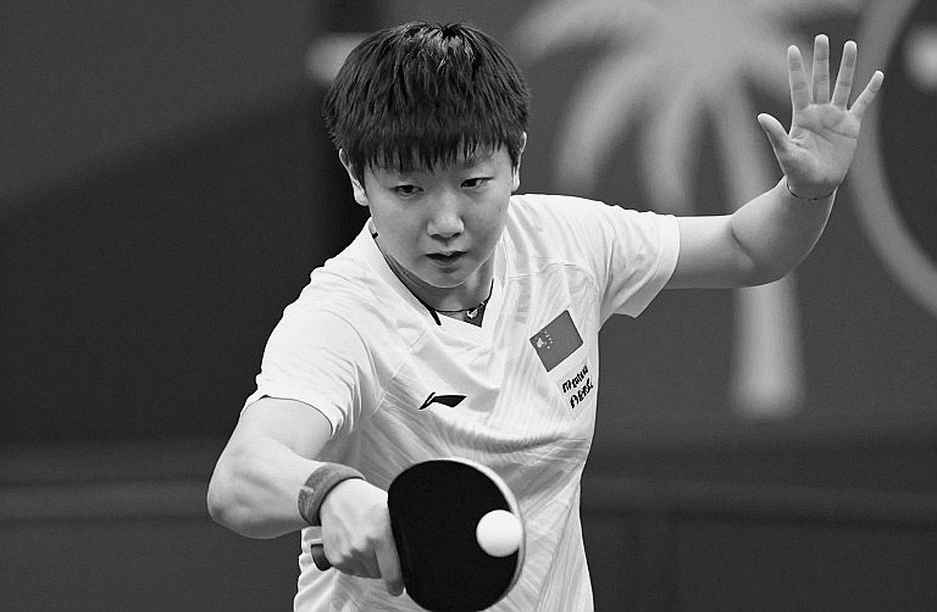
Modern football does not need more stars, it needs more people who read the match. That statement is many times truer for table tennis. A table tennis team does not win with one outstanding player, but with every member understanding their role and understanding the opponent. And to understand the opponent, you must have data on them.
The blind spot in execution
There is a paradox I have observed. Vietnamese coaches are often very good at spotting their own students' mistakes, but rarely analyse the opponent's mistakes systematically. They rely on feeling, on years of experience, and sometimes on prejudice. Experience is a precious asset, but experience unverified by data easily becomes prejudice.
When I sat in the fifth row that night, I did not just see a match. I saw a table tennis nation playing without a map. Young players step onto the court with all their passion, but no one hands them an analysis of the opponent. They must grope, guess, and adapt within each game. And in a sport where each point lasts only seconds, groping can be the difference between winning and losing.
The transfer market is a casino, but the house always wins. In table tennis, the house is whoever holds the data. Nations with good analysis systems do not just win matches, they shape how the sport is played, coached and developed. They set the standard, and other table tennis nations must chase it.
What to do next
The first step is not buying expensive equipment. The first step is changing how we look at a match. Every match must leave a data trace. Every player must be evaluated by specific indicators, not just by feel. Every coach must develop the habit of reviewing footage and counting what can be counted.
I believe Vietnamese table tennis has enough talent to go further. But talent without a system will remain only potential. And potential, in elite sport, is the cheapest thing, because everyone has it, but very few turn it into reality.
When the court is empty, I hear the whistle more clearly. And I believe that when we start counting what has never been counted, we will begin to understand why we win, and why we lose. That is the first step, not the last, for a small table tennis nation to find its place in a world that runs on data.